Quick answer: how to reduce particle size of powder depends on pairing mill mechanism with feed and target size: hammer mills for coarse work, ball mills for fine powders, jet mills for below 1 micron. Confirm by measuring the distribution.
Milling sits among the wider powder processing unit operations, and this page is the starting point for choosing between mill families. Roller compaction is a related operation, and what is roller compaction explains it.
Start with the mechanism: impact, attrition or compression
A mill breaks particles by impact, attrition or compression, and that action largely decides which feeds and finenesses it suits. Most machines mix actions, so classify a mill by its dominant action rather than its name.
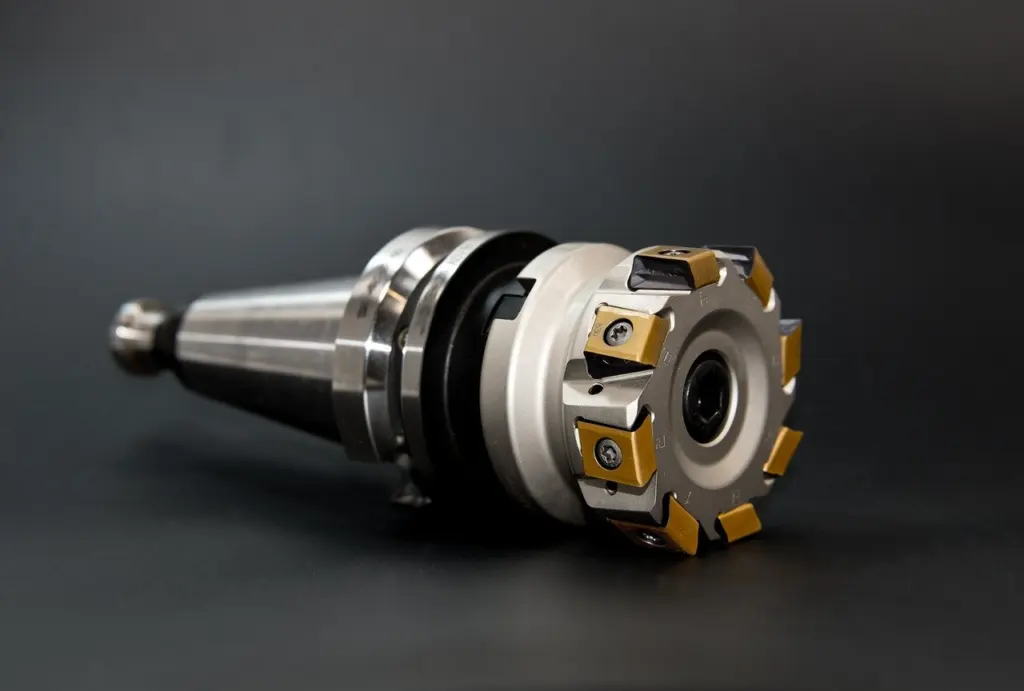
- Impact: a hammer mill uses a rapidly rotating rotor fitted with free-swinging or fixed hammers that repeatedly strike material in the chamber.
- Impact plus attrition: ball mills combine impact with attrition (abrasion), with the grinding media tumbling against the feed and against each other.
- Compression: Raymond mills grind by compression and impact. Vertical roller mills use compression and attrition on a rotating grinding table.
The choice has practical consequences. A review of grinding equipment in the peer-reviewed literature notes that an inadequate choice of equipment often results in inefficient grinding, low reactivity of the product, excess energy use and equipment wear. Selecting by mechanism first avoids most of those outcomes.

Mill types compared by target size
The table lines up the main mill families on mechanism, indicated fineness and the main trade-off. Treat the fineness column as a starting window, because feed material and screen or classifier settings move it.
| Mill type | Mechanism | Fineness indicated | Main trade-off | Planning use |
|---|---|---|---|---|
| Hammer mill | Impact from rotor hammers | Screen throughput drops dramatically beyond 42 mesh | Low initial cost and low wear, but high energy consumption | Coarse to medium reduction, or a first stage ahead of a finer mill |
| Ball mill | Impact and attrition from grinding media | 200-325 mesh for ball clay and industrial minerals; down to sub-micron | Noisy, energy-intensive, heavy, large footprint | Fine to ultra-fine powders when space and noise are acceptable |
| Jet mill | Fluidized bed or opposed jet configurations | Down to less than 1 micron | Configuration must suit the material properties | Ultra-fine targets that other mills cannot reach |
| Compression-type mill (Raymond, vertical roller) | Compression with impact or attrition | Used as the second stage after a hammer mill | Needs a coarser pre-reduced feed | Intermediate step between coarse and fine milling |
Figures come from the Digitalfire size reduction glossary and the capabilities listing of a particle processing company.
Hammer mills
A hammer mill suits operations that need a simple, inexpensive machine and a moderate target fineness. Its low wear is a point in its favour, though the high energy consumption counts against it at scale. Many plants use it as the front end of a milling line. For machine detail, how does a hammer mill work covers the rotor, hammers and screen.

Ball mills and grinding media
Ball mills are the usual route when the product must be fine and the feed is a mineral or clay-type material. The grinding media are typically steel balls, but ceramic or flint pebbles are also used, so the media material is a selection variable alongside the mill itself. The drawbacks are real: noise, energy intensity, weight and a large footprint. Choose a ball mill when fineness matters more than footprint, and look elsewhere for a compact installation.

Jet mills
Jet milling is the choice when the target falls below what impact and tumbling mills can reach. Fluidized bed and opposed jet configurations are both offered for diverse material properties, so the feed’s characteristics should steer the configuration. A stated toll-processing range runs from 500 microns down to less than 1 micron, which shows how wide a range of fineness one service can cover.
Pin mills and other options
Pin mills appear in the same equipment review as ball, hammer and jet mills, alongside disc mills, attritors, bead mills and planetary mills. Shortlist any of these by target size and feed behaviour, then trial-grind the actual material. The result should be judged by measured distribution, as with every other mill type.
Matching the mill to the feed material
Hardness and abrasion
Hardness and abrasiveness show up as equipment wear, which the review lists among the consequences of a poor equipment match. Hammer mills are described as low-wear designs for clay, whereas ball mills carry a media cost because the balls or pebbles wear in service. Test wear and contamination on the real feed before committing to a mill, rather than relying on a generic hardness class.
Heat-sensitive feeds
Grinding of thermally unstable substances, such as the polyphenolic and protein materials discussed in the grinding equipment review, is a recognised concern. For such feeds, treat product quality after milling as a selection criterion alongside particle size. The mills described as high energy or energy-intensive, the hammer mill and the ball mill, deserve the closest trial scrutiny, with the product checked after milling and not only the size.
Staging a reduction line
A single mill rarely covers a wide gap between feed and target. A compression-type mill can serve as the second stage after a hammer mill, so the hammer mill does the coarse work and the next machine refines it. Ball mills are almost always run in a closed circuit with an air classifier, which returns oversize for further grinding. Jet mills then handle the ultra-fine end.
Plan the line from the target backwards: name the finest size needed, pick the mill able to reach it, then add upstream stages only if the feed is too coarse for that mill.
Measuring the result
Laser diffraction analyzers are a standard way to obtain particle size distribution data, and laboratories use them to report accurate distribution measurements. Judge a mill trial by the whole distribution, comparing feed and product, rather than by a single average size. Tracking the distribution also shows whether an oversize tail remains after milling, which is the cue to adjust screens or classifier settings.
Reports from a laser diffraction analyzer are covered in the particle size analysis capabilities of commercial laboratories.
Troubleshooting a milling result
- Oversize in hammer mill product: grinding by impact alone produces a significant amount of oversize particles. Add a screen, or pass the product to a compression-type mill as a second stage.
- Throughput falls as the target gets finer: screen throughput drops dramatically beyond 42 mesh on a hammer mill. If the target is finer than that, move to another mill family instead of fitting a finer screen.
- Fine target missed in a ball mill: check that an air classifier is in the circuit, because ball mills are almost always run in closed circuit.
- Low reactivity, high energy or fast wear: these are the signs of an equipment mismatch, so revisit the mechanism choice before adjusting settings.
Frequently asked questions
Is a crusher the same as a mill?
Not quite. Crushing and shredding are used for initial size reduction of bulkier materials. Milling then takes the pre-reduced feed to powder fineness, and hammermills, crushers, shredders and grinders are all listed as size reduction equipment.
Can a ball mill run wet as well as dry?
Yes. Ball mills can be operated in wet or dry modes to produce very fine to ultra-fine powders, so the process route should be set by what the downstream step can accept.
Why report a size distribution rather than one size?
Micronizing is aimed at fine-tuning particle distribution for improved flowability and consistency, so the spread of sizes matters as much as the average.
How much does equipment choice affect energy use?
The energy needed for the same size reduction can differ several times depending on the equipment chosen, which is why mill selection is worth settling before purchase.