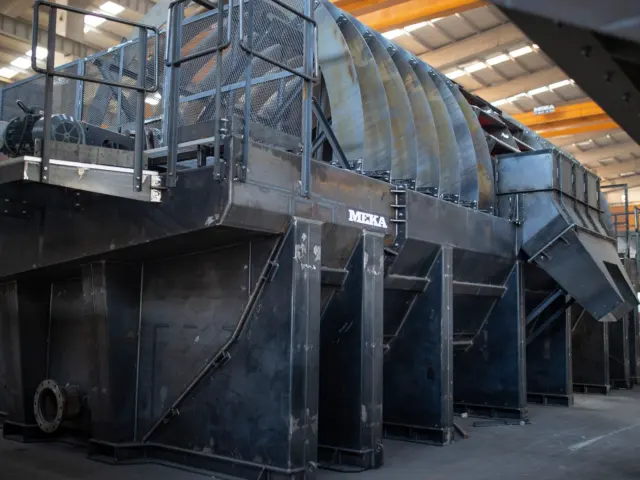
A clear answer to how does a hammer mill work starts with the rotor: hammers are flung outward so they strike the feed, and material stays in the chamber until fragments pass a screen. The screen opening largely decides the final size.
It is one of several machines covered under powder processing unit operations. For the wider choice between mills, start with how to reduce particle size of powder.
How a hammer mill breaks material
The basic design is a rotating shaft carrying free-swinging hammers, all enclosed in a drum, as Compactors Inc. describes it. The shaft with its hammers is the rotor. Because the hammers hang loosely, centrifugal force throws them outward once the rotor turns, which is the hammermill action Eagle Crusher uses to separate the machine from other crushers.
The stages follow a fixed order:
- Feed enters the chamber. Material drops or is fed into the milling chamber, where the rotor is already at running speed.
- Hammers strike the particles. Hardened steel hammers rotating rapidly inside the chamber hit the feed, per Jay Khodiyar’s technical description. Particles also break against each other and against the chamber wall.
- Fragments stay in the chamber. Material keeps being reduced until it is small enough to pass through a screen with openings matching the desired particle size.
- Screened product leaves. Only fragments that fit the openings discharge, either by gravity or pneumatically.
Impact is the governing mechanism. Eagle Crusher notes that hammermills and impact crushers use impact force, while jaw and cone crushers use compression. That matters for material choice: impact suits brittle feed that shatters on a blow, and it is a poor fit for material that deforms or smears instead.
What controls the final particle size
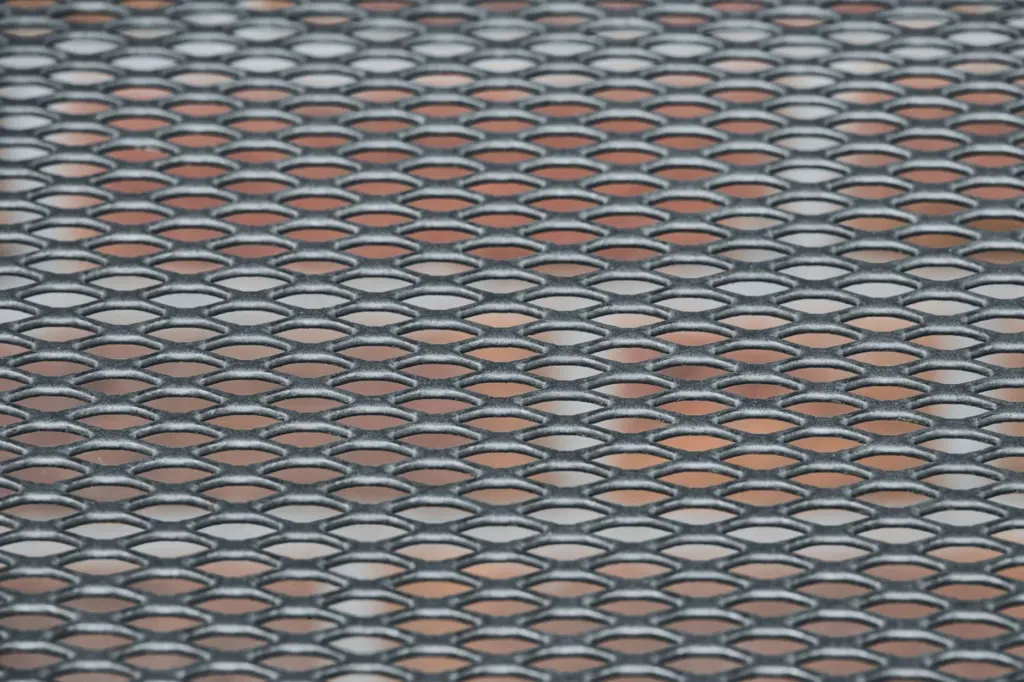
Screen opening is the main control. The size of the final product depends on the size of the openings in the screen or grates at the bottom of the machine, and the screen is the gate that decides when material may leave. Jay Khodiyar adds that screen selection depends on the desired output particle size.
Eagle Crusher says hammermill grates come in a range of designs and can be interchanged to suit the application. That makes the screen the cheapest lever for changing the product: swap it before you consider changing anything else in the machine. A finer product is not simply a smaller hole in every case, though. A tighter screen keeps material in the chamber longer, so it affects throughput and wear as well as size.
Choose screen openings from the size your downstream step needs, not from the largest size you can tolerate. Particles made this way are very uniform and tend toward a spherical shape, according to Compactors Inc., so the screen also sets how consistent the product is.
Rotor speed and feed rate
Hammer mill rotors turn fast. Jay Khodiyar lists the primary grinding elements as rotating at 2000 to 6000 rpm. Rpm alone does not give tip speed, which also depends on rotor diameter, so compare machines on tip speed rather than shaft speed when you can get the rotor dimensions from the maker.
Feed rate is the other operating variable. The same source gives capacities of 3,000 to 8,000 kg/hr for its biomass hammer mills. That range belongs to one maker’s machines for one kind of feed, so treat it as an example of scale, not a figure for your material. Throughput for a given mill falls as the screen gets finer or the feed gets harder to break, and the maker’s rating for your actual material is the number to plan around.
Feed steadily. A surge overloads the chamber, and a starved mill wastes hammer travel. A feeder that meters material into the hopper is a better control than relying on the operator.
Materials that suit a hammer mill and materials to avoid
Hammer mills handle a broad spread of brittle and fibrous feed. Abrasiveness is the deciding factor, because every hammer blow also wears the hammer.
| Material group | Fit for a hammer mill | Planning use |
|---|---|---|
| Glass, ceramics, dry chemicals | Commonly crushed in gravity discharge machines | Good candidates for a standard gravity discharge mill |
| Paper and biomass | Suited to pneumatic discharge machines | Choose pneumatic discharge for light, bulky feed |
| Limestone and similar low-abrasive materials | Ideal, with no excessive hammer wear | Expect longer hammer life than with harder feed |
| Hard rock, granite, trap rock | Listed as highly abrasive | Consider an impact crusher instead of a hammer mill |
Figures and suitability above come from Jay Khodiyar and Eagle Crusher.
Beyond the table, Eagle Crusher lists asphalt, concrete, brick, limestone and coal among the materials hammermills crush. Compactors Inc. adds soya, nutshells, groundnuts and diverse types of beans for grinding duty. The unsuitable group is therefore highly abrasive hard rock, where fast hammer wear defeats the economics. If your feed is a hard mineral, look at the grinding approach in how does a ball mill work before committing to a hammer mill.
Hammer wear and inspection
Hammers are typically cast in solid manganese but can be made from a broad range of metallurgies, per Eagle Crusher. If your feed is more abrasive than the standard, ask the maker about a different hammer metallurgy rather than accepting rapid wear as normal.
Wear is where most operating cost accumulates, and the feed itself sets the rate. Low-abrasive limestone does not cause excessive wear on swinging hammers, while hard rock and granite do. Manufacturer inspection intervals vary by model and duty, so follow the maker’s schedule for your machine and shorten it when you move to harder feed. A practical routine is to open the access door at each scheduled stop and compare hammer edges with a new hammer, as worn edges are visible before output changes.
Troubleshooting a hammer mill
Most problems trace back to the same four parts: screen, hammers, feed rate and the material itself. Work through them in that order.
Product too coarse or too variable
Check the screen first. Output size depends on the openings, so a screen with the wrong hole size, a damaged screen or one that has been fitted incorrectly will show up directly in the product. Confirm the installed screen is the one specified before looking at the hammers.
Screen blinding
Blinding is when material clogs the screen openings so less passes through. It reduces throughput and pushes up load on the rotor. Reduce the feed rate and inspect the openings for packed material. If the feed is fibrous, sticky or damp, a screen with larger openings or a pneumatic discharge design, which suits light feed such as paper and biomass, may be a better match than running the same screen harder.
Heat
Material that stays in the chamber too long absorbs a lot of impact energy. Rising discharge temperature suggests the load is too high or the screen is holding material back. Cut the feed rate, check for blinding and confirm the mill is running at its rated speed. For heat-sensitive feed, ask the maker whether the machine suits your product.
Worn hammers and falling output
Hammers that have worn back no longer reach the intended gap to the chamber wall and screen, so they strike less effectively. Output size drifts and throughput falls. Replace or rotate hammers on the maker’s schedule, and consider a harder metallurgy if the feed is abrasive.
Throughput below target
Look at screen opening, feed consistency and hammer condition together. A finer screen lowers throughput by design, so decide whether the product size really needs to be that fine. Compare against the maker’s capacity for your material, not against a figure quoted for another feed.
Frequently asked questions
Is a hammer mill the same as an impact crusher?
No, though they share the same principle. Hammermills and impact crushers both use impact force, while jaw and cone crushers use compression.
Does a hammer mill produce a lot of fines?
Not necessarily. Grates set for a specified top size can produce that size with minimum fines, and the particles tend to be uniform.
What shape are the particles from a hammer mill?
They tend toward a spherical shape and are very uniform, according to Compactors Inc.
Can the same mill make different product sizes?
Yes. Screens and grates are interchangeable, so changing them changes the opening and therefore the product size, within what the machine and feed can handle.