
How does a fluid bed dryer work? Heated air is pushed up through a perforated bottom until the granules lift and hang in the stream, so particles dry in moving air. The main condition is airflow that suspends the bed without blowing fines out.
That one idea explains most of the equipment and most operating problems. Where the dryer sits among powder processing unit operations matters less than whether the bed actually fluidizes, so the sections below follow the air from inlet to exhaust.
The drying sequence, stage by stage
A fluid bed dryer moves hot air through a bed of wet granules from below. According to Pharmaguideline, the bottom of the bowl is perforated, and hot air moves through the granules to be dried. The stages run in this order:
- Load the product container. Equipment maker OSD Machinery advises spreading the material in an even layer, so that air reaches each particle equally.
- Heat the inlet air. Air enters the bowl from the bottom and is heated by heaters to a set temperature.
- Raise the airflow gradually. OSD Machinery describes increasing airflow until the particles start to lift.
- Hold the bed in suspension. The granules rise from the bottom and are suspended in the air stream, so the whole bed is in contact with warm air at once.
- Watch and adjust. The operator checks the bed through the viewing port and monitors product moisture, changing air temperature or velocity as needed.
- Clear the exhaust. Air leaves through the exhaust filter and blower, which are standard parts of the dryer along with the control panel and air distribution plate.
The even loading in the first stage is easy to skip, but it sets up everything after it. A bed that starts lopsided lifts unevenly, and the later stages then have to compensate for it.
Fluidization velocity and why it matters
Fluidization velocity is the air speed at which the upward stream is strong enough to lift and suspend the particles instead of letting them sit as a packed layer. Pharmaguideline notes that the granules rise and are suspended in the air stream, and OSD Machinery’s operating guidance expresses the practical side: increase the airflow gradually until particles start to lift. Raising airflow gradually gives the operator a visible lift point to work from instead of overshooting it.
The right air speed depends on the powder. The same guidance recommends lower air speeds for finer powders and higher speeds for coarser material, to avoid blowouts or clogging. In practice this makes the lift point a starting reference for each product, not a setting to copy between products. A fine powder run at a coarse-powder speed risks being carried toward the exhaust. A coarse material run too gently may not lift at all.
Velocity is also a matter of how the air is delivered. Pharmaguideline states that a suitable pressure drop across the distributor is necessary for proper fluidization. Air speed alone does not make a bed behave if the plate beneath it delivers air unevenly.
The air distributor plate
The air distributor plate is the perforated surface that turns a single inlet stream into many small streams entering the bed across its whole area. Pharmaguideline reports that fluidization is stable and even when the proper distributor is used during drying. That makes the plate a selection decision, not a detail. A plate that does not suit the product shows up as unstable or uneven fluidization, and no amount of tuning at the control panel fully repairs it.
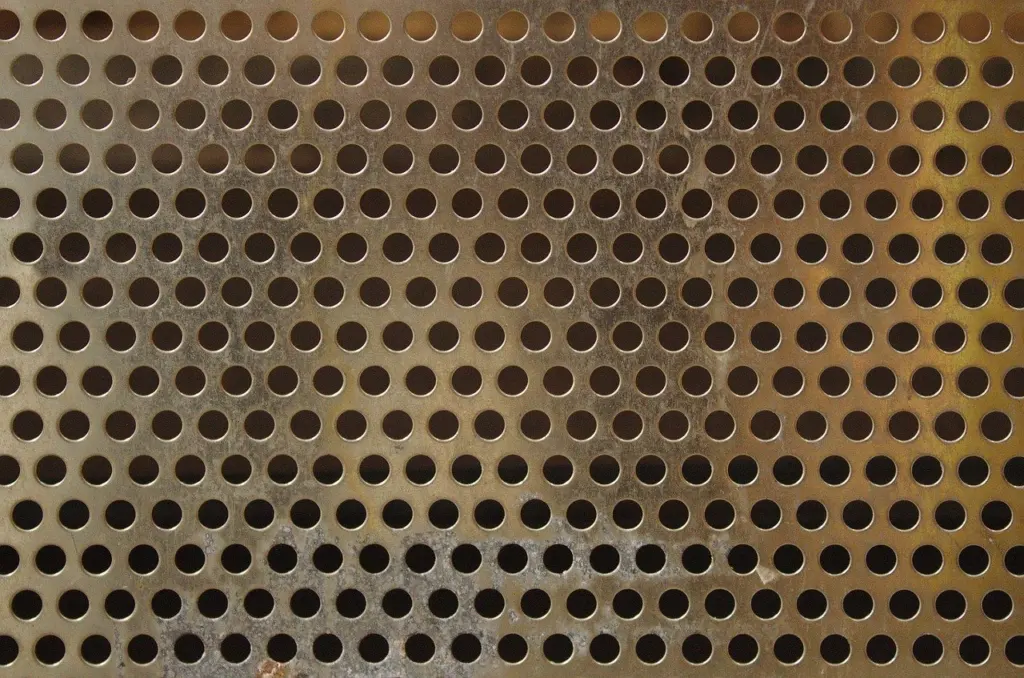
Plates also need routine care. OSD Machinery recommends cleaning the filters and distributor plates after each batch to prevent clogs. Blocked perforations remove the even air supply the plate exists to provide.
Bed temperature and telling when the bed is dry
Bed temperature follows from the inlet air, which is the main control lever. Pharmaguideline says the inlet air temperature can be controlled to ensure the correct amount of moisture is removed, and that parameters such as flow rate and temperature can be adjusted from the control panel. Temperature and airflow therefore work together. Temperature sets how much moisture the air can carry away, while airflow keeps the bed suspended so that air can reach every particle.
Knowing when the bed is dry is an operator judgement backed by instruments. OSD Machinery advises keeping an eye on the moisture level of the product and adjusting air temperature or velocity accordingly. Some dryers include temperature or moisture sensors that track the drying process in real time. Where those sensors are fitted, they give a more objective end-point than watching the bed alone. Without them, the product’s measured moisture is the check to rely on, not the appearance of the bed.
Channeling and failure to fluidize
Channeling is the failure in which air finds easy paths through the bed instead of lifting it as a whole, leaving the rest of the material undisturbed. Several supported causes lead to this or to a bed that fails to lift:
- Feed that is too wet. Pharmaguideline notes that when the feed is too wet there is insufficient fluidization and flexibility.
- Fines that aggregate. The same source says fine particles can aggregate in some situations, and that attrition is a high risk in some dryers. Fine powders therefore need the gentler airflow discussed above.
- Uneven loading. A bed that is not spread in an even layer gives air an easier route through the thinner areas.
- Blocked air paths. Clogged distributor plates or filters restrict the air that is supposed to move evenly through the bed.
The viewing port is the first diagnostic. OSD Machinery suggests watching the particles through it to confirm they stay fluidized without clumping. If the bed is clumping or lifting only in patches, stop raising airflow. Check the load and the moisture of the feed first, because more air tends to carry fines toward the exhaust instead of fixing the problem.
Because fluid bed dryers work on granules, the way a granule is made also affects how it behaves in the bed. The types of granulation differ in what they hand to the dryer, and that is worth reviewing when a product fluidizes poorly.
Fluid bed dryer versus tray dryer
The fluid bed dryer is the faster, more uniform option, which is why it is replacing the traditional tray dryer. Pharmaguideline states that fluid bed drying is rapidly replacing traditional trays for drying products, that it reduces drying times and that it keeps drying conditions uniform. The mechanism explains the advantage. A fluidized bed exposes particles to moving warm air, while a tray dryer works on product laid out in trays.
A published figure for the time saving depends on the product and the equipment, so none is quoted here. The supported conclusion is directional: fluid bed drying shortens drying time against trays. Trays remain the simpler point of comparison, but they do not offer the same uniform exposure to the drying air.

The fluid bed dryer also has costs. Fines can aggregate, attrition is a high risk in some dryers, and the product must actually fluidize. A material that is too wet or fails to lift cannot use the dryer’s main advantage. If the product is fragile or very fine, check whether the bed can be run gently enough before committing to this route. For other ways of handling drying duties, how does a spray dryer work covers a different approach.
Frequently asked questions
How often should the filters and plates be cleaned?
According to OSD Machinery’s operating guide, the filters and distributor plates should be wiped down once every batch is finished, which helps keep clogs from forming.
What can be changed from the control panel?
Pharmaguideline says parameters such as flow rate and temperature can be adjusted from the control panel, including the inlet air temperature.
What happens if the outlet filter clogs?
According to Pharmaguideline, the pressure inside the vessel could increase if the outlet filter is clogged, which is another reason to clean filters between batches.