A plant adding a sticky fine powder to a process vessel needs a different feeder from one metering a free-flowing powder. The main types of powder feeders are screw, vibratory, rotary valve and belt designs, chosen by powder behavior and accuracy needs.
This overview sits within powder and bulk solids handling and compares feeder types side by side, so detailed design questions can be left to dedicated guides. A quick narrowing of the choice:
- Cohesive or sticky powder: a properly designed screw feeder is the usual starting point.
- Friable, temperature-sensitive or abrasive material: a vibratory feeder is the stronger candidate.
- Tight accuracy targets: a weighing (gravimetric) arrangement is worth considering. The guide on how does a loss in weight feeder work explains that route.
Feeders and conveyors: what a feeder does
A feeder meters powder at a controlled rate into the next process step. Palamatic Process states that material feeding equipment, also called powder dosing equipment, is not a conveying system. A conveyor moves material from one place to another, while a feeder decides how much leaves the hopper per unit of time.
A volumetric feeder sets output by how fast its screw, tray or rotor runs, not by weighing what comes out. On feeding equipment the speed can be controlled through a variable frequency drive (VFD), which gives slower and faster feed rates. That makes speed control the first lever for tuning any volumetric type, and the reason the powder’s flow behavior matters so much.
Screw feeders
Screw feeders are the common all-rounder. Palamatic Process notes they fit most applications, with friable or heat-sensitive materials the main exceptions. The screw gives a positive extraction, pulling material out of the hopper instead of waiting for it to fall.
Accuracy and feed range
That is a best-case figure for suitable materials, not a guarantee for every powder. KWS Manufacturing adds that variable speed drives improve metering accuracy and can provide a wide range of feed rates. In heavy industrial duty, screw feeders typically turn at less than 20 RPM, so low speed is normal and not a sign of poor performance.
Who a screw feeder suits
It suits plants that need positive extraction and a wide turndown through a VFD. Pigtail screws, which have no central shaft, are often used for light-density or sticky, cohesive materials. The limits are practical. Screw feeders consume more power than vibrating feeders, and adhesive materials and fines can build up and restrict flow. Friable products can also be damaged by the screw action.
Vibratory feeders
A vibratory feeder moves powder along a tray or trough by controlled vibration. Palamatic Process lists virtually no moving parts, which minimizes maintenance needs, and low power consumption. It also states that these feeders handle both low and high feed rates.
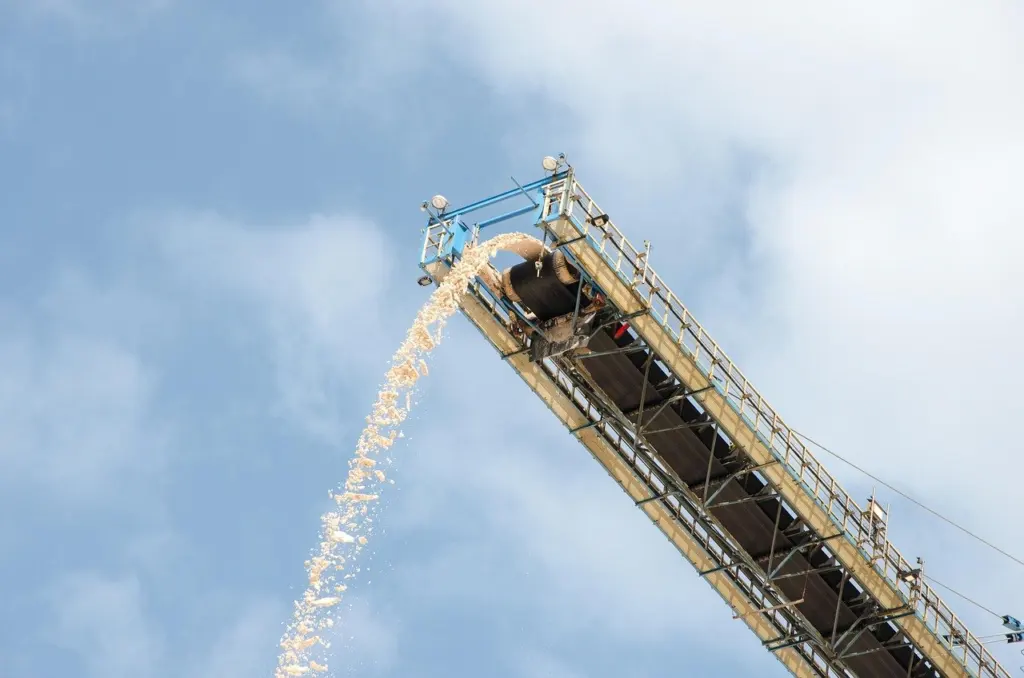
They are the recommended route when material is friable, temperature sensitive or abrasive, because the product is not dragged through a screw. APEC adds that a vibratory feeder may work better than a screw feeder for long-strand materials.
Limits to plan around
A vibratory feeder does not provide positive extraction, so it cannot pull material out of the hopper. The hopper outlet must therefore deliver reliable flow on its own. Vibration can also segregate materials that have been mixed, which matters for blends of different particle sizes or densities. No accuracy figure is attached to vibratory feeders here, so any accuracy requirement should be confirmed with the manufacturer using the actual powder.
Rotary valve and belt feeders
Rotary valve feeders meter powder through a rotating, pocketed rotor beneath a hopper or bin outlet. Belt feeders draw material from under a bin on a moving belt and are the higher-capacity volumetric alternative for bulk material. Both are volumetric in the same sense as screw and vibratory units: output follows drive speed and how well the material fills the available space.
Because both depend on a steady hopper outlet, the hopper and the powder’s flow properties usually decide whether they are viable. Choose them when the capacity or the discharge arrangement of the process points that way. For accuracy-critical dosing, weighing the feeder and its contents is the stronger route.
Matching a feeder to powder behavior
Cohesive and sticky powders
APEC states that a properly designed screw feeder will be best for cohesive materials. The hopper matters as much as the feeder. An asymmetrical mass-flow hopper helps discourage rat-holing, where powder forms a hollow channel and stops flowing. KWS gives the hopper style used with screw feeders as square or rectangular with a sloped bottom and limited storage capacity. In sticky service the build-up risk described above still applies, so cleaning and inspection access should be part of the choice.
Free-flowing powders
Very free-flowing bulk materials can be metered accurately with a screw feeder, provided the design is right. KWS points to extended shrouds for accurate feed rate control with very free-flowing materials. Where the powder is also delicate, the vibratory route is the alternative.

Aeratable fine powders
APEC describes aeratable materials as usually fine powders that behave like liquids when aerated. For a feeder, that means the aeration state at the inlet can change the metered quantity as much as the drive speed does. Characterizing the powder first helps, and the guide on bulk density vs tapped density covers how density measurements show how a powder packs and aerates.

Abrasive, friable and heat-sensitive materials
Abrasive material favors a vibratory feeder, but where liners are used, APEC notes that as the hardness and abrasion resistance of a liner increases, it also becomes more brittle. A harder liner is therefore not automatically the better one, and the powder’s impact behavior should be part of the decision.
Side-by-side comparison
| Criterion | Screw feeder | Vibratory feeder | Planning use |
|---|---|---|---|
| Hopper extraction | Positive extraction (pulling) | No positive extraction | Choose a screw where the hopper outlet cannot be relied on to flow alone. |
| Feed rate and accuracy | In some instances -/+ 1-2 grams; wide rate range with a VFD | Handles low and high feed rates | Confirm accuracy for the actual powder before committing. |
| Best-suited materials | Cohesive materials when properly designed; most applications | Friable, temperature-sensitive, abrasive or long-strand materials | Start from powder behavior, not from the equipment preference. |
| Power and maintenance | Higher power use | Low power; virtually no moving parts | Vibratory units reduce running cost and servicing effort. |
| Main watch-out | Build-up of adhesive materials and fines | Possible segregation of mixed materials | Check blends and sticky fines before selecting. |
Figures and conditions in the table come from Palamatic Process and APEC.
Feeder selection checklist
Work through these steps in order, because each narrows the field for the next.
- Classify the powder’s flow behavior. KWS lists the flow characteristics of the material being stored and metered as a design input. Decide whether it is cohesive, free-flowing or aeratable.
- Check fragility and temperature. Friable or heat-sensitive material points away from a screw and toward a vibratory feeder.
- Define the accuracy requirement. Treat quoted accuracy as a best case for suitable materials. Where tolerances are tight, consider a weighing arrangement.
- Decide whether the hopper outlet needs help. A feeder with positive extraction compensates for a poor outlet, while a vibratory feeder needs a hopper that flows reliably by itself.
- Weigh the running costs. Vibratory units use less power and have fewer moving parts. Screw units use more power but extract positively.
- Assess wear and build-up. Consider abrasion, liner trade-offs, adhesive fines and the access needed for cleaning.
- Confirm with the manufacturer. Test the actual powder against the shortlisted type before finalizing.
Frequently asked questions
How much extra power does a screw feeder need at start-up?
KWS states that start-up horsepower and torque can easily be 2.5 times normal operating conditions. Drive and motor sizing should allow for that peak.
Why does a feeder need an integrated hopper?
Palamatic Process explains that a constant head load must be maintained over the feeding equipment, and the integrated hopper provides it.
What does a shroud do on a screw feeder?
KWS specifies that screw feeders must be equipped with a shroud for at least 2 pitches beyond the inlet opening. The inlet is always flood loaded (100-percent), so the shroud helps control what is metered out.
Can packed powder overload a screw feeder?
It can increase the load considerably. KWS notes that the Material Factor or HP Factor (MF) can exceed 4.0 for some bulk materials when under pressure and packed, so packed powder needs checking at the design stage.