How does a loss in weight feeder work? A scale carries the whole feeder and its hopper, and a controller adjusts the discharge so the weight falls at the target feed rate. Refill and calibration decide how accurate it stays.
This guide sits within powder and bulk solids handling and assumes the basic types of powder feeders are already familiar. It focuses on the weigh-and-control loop, then on the two places where real installations lose accuracy.
The weigh-and-control loop
Merrick describes a loss in weight feeder as a gravimetric metering device that doses material at a predetermined feedrate. Its operation is regulated by the weight lost from the live load as product is discharged. The feeder measures what has left the hopper rather than what the screw is expected to deliver.

- Set the target. The operator enters a feed rate in the controller. The controller turns that rate into a rate at which the weighed mass should fall.
- Discharge. A screw or other discharge device moves material out of the hopper and into the process.
- Weigh. The weighing device under the feeder reports the weight continuously. Merrick describes the feeder as receiving constant feedback from a sensitive weighing device.
- Compare. The controller compares the measured weight loss with the target loss over time.
- Correct. If material leaves too slowly, the controller raises discharge speed. If it leaves too fast, it lowers it.
- Refill. When the hopper runs low, it is topped up and the loop resumes.
Because the loop corrects against actual mass, it compensates for changes in how much material each screw revolution delivers. That is the central advantage over feeding by volume, covered below. First, the hardware that closes the loop.
Hardware that closes the loop
Load cell and scale
The load cell is the sensing element. It supports the feeder frame and converts the weight of the hopper, drive and contents into an electrical signal. It cannot tell a falling powder charge from a pipe pulling on the frame, so anything touching the weighed assembly corrupts the reading. Plastics Technology notes that vent lines must not touch equipment on the feeder scale. Vibration is a related concern for scale installation.
Controller and averaging
The controller turns the weight signal into a rate and adjusts the drive. It also averages feed-rate data over time, and Plastics Technology points out that the longer this interval is, the more accurate the feeder will look. A long average can hide short bursts of error. Judge accuracy over a time frame that matches how fast the downstream process responds.
Screw discharge
A screw feeder is the usual discharge device. Plastics Technology reports that multi-flight single-screw feeders have been shown to feed just as accurately as twin-screw feeders over a 1- to 2-second time frame. Screw choice should follow the powder and the process, with accuracy compared over the interval that matters.
The refill cycle
The refill cycle is where the loop is most exposed. Plastics Technology states that most feeding problems start with the refill system. While material is added, the weight signal rises instead of falling, so the controller cannot measure discharge from weight loss alone.
Volumetric mode during refill
In volumetric mode the controller stops correcting from the weight signal. The screw delivers a set volume per revolution, and the controller holds the discharge it was running. The feeder is then only as accurate as the material’s bulk density is steady. When the refill ends and the weight settles, the feeder returns to gravimetric control. A short refill, a settled hopper and a steady incoming stream keep that volumetric window small and its error low.

How much refill disturbance matters
The tolerance depends on the process. Plastics Technology says feeding disturbances during refills that are tolerable at 400 rpm may not be acceptable at 600 to 1000 rpm on a compounder. At 1000 rpm in a twin-screw compounder, residence time between entering the feed throat and starting to melt is only about 1 to 1.5 seconds, so a brief upset passes straight into the product.
- Slow processes can absorb a short refill disturbance because the downstream mixing smooths it.
- Fast compounders need a refill that disturbs the feed as little as possible, because there is almost no time to even it out.
- Refill valve choice affects how smoothly material enters. If the refill valve is a rotary valve, see how does a rotary valve work for its metering behaviour.
Test feeder performance across several refills, not just between them. Plastics Technology advises evaluating performance during multiple refills, since a single clean cycle proves little.
Why gravimetric feeding beats volumetric
Volumetric feeding assumes each screw turn delivers the same mass. Bulk density breaks that assumption. Plastics Technology notes that the density of a powder depends on how it has been conveyed, with gently handled powder having up to 33% higher bulk density. A volumetric feeder fed from such a source will deliver a different mass at the same speed, while a loss in weight feeder sees the change on the scale and corrects.
| Criterion | Loss-in-weight (gravimetric) | Volumetric mode | Planning use |
|---|---|---|---|
| What is controlled | Mass leaving the hopper per unit time | Volume delivered per screw revolution | Choose gravimetric where mass-based recipes matter |
| Feedback | Continuous weight signal | None from the scale | Volumetric needs steady material properties |
| Sensitivity to bulk density | Corrected by the loop | Delivered mass shifts with density | Check how the powder is conveyed upstream |
| Typical role | Normal running | Fallback, such as during refill | Keep volumetric windows short |
The comparison draws on Merrick’s description of the weigh feedback and Plastics Technology’s discussion of bulk density.
The advantage is not absolute. Plastics Technology also reports a vibratory feeder on chopped glass with a standard deviation of 0.015% over 22 test runs, and says newer electronics and algorithms make vibratory feeders every bit as accurate as screw or belt feeders. Quoted accuracy figures depend on material, interval and test method, so compare them like for like.
Calibration and installation
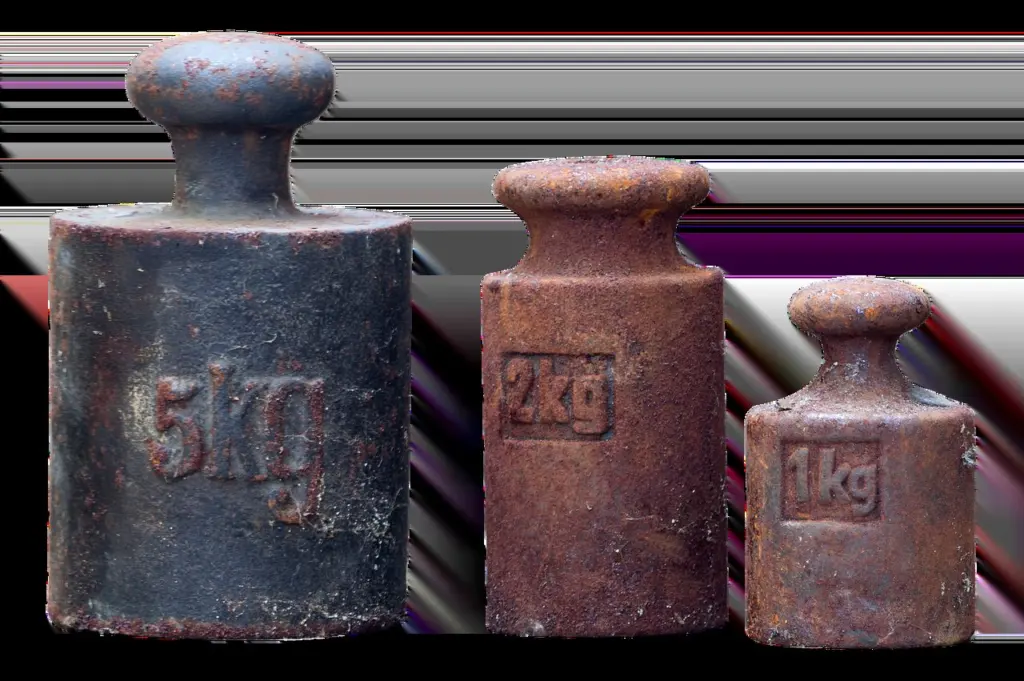
Calibration ties the scale signal to real mass. A scale that reads wrongly makes the controller correct toward the wrong target, so a perfectly tuned loop still delivers the wrong rate. Calibration is normally checked with known test weights on the feeder scale. Repeat the check after any change to the mechanical setup, because the scale also senses anything that adds load or drag to the frame.
Calibration alone does not guarantee accuracy. Keep flexible connections and vent lines free of the weighed assembly, as noted earlier, and verify the result by running the feeder through several refills rather than relying on a single reading. Pair that with a sensible averaging interval so a long average does not mask refill upsets.
Hopper bridging
Hopper bridging is a flow problem that shows up as a control problem. If powder arches over the outlet, material stops reaching the screw, weight loss falls short of the target and the controller raises screw speed to compensate. When the bridge collapses, the screw is running fast and delivers a surge. Treat a feeder that alternates between starving and surging as a flow problem first, and check hopper and powder behaviour before retuning the controller. Bridging usually appears as the hopper empties toward the refill point, so it can be mistaken for a refill fault.

Frequently asked questions
Can a volumetric feeder ever match a loss-in-weight feeder?
Plastics Technology says a volumetric feeder well matched to the material could perform as well as, or better than, a loss-in-weight feeder. The condition is a steady material that behaves the same way from batch to batch.
Does a screw feeder always outperform a vibratory feeder?
No. Plastics Technology reports that newer electronics and algorithms make vibratory feeders as accurate as screw or belt feeders, so the choice should rest on the material and the process.
Why can a feeder look more accurate than it is?
The controller averages feed-rate data, and a longer averaging interval makes the feeder look more accurate. Short disturbances such as refill upsets can disappear inside a long average yet still reach the process.
How should refill performance be tested?
Run the feeder through multiple refills and observe the feed during each one. A single cycle may not show the disturbance that matters on a fast compounder.