Silo design for bulk solids starts with measured flow properties, not storage volume. Test the powder first, then choose the flow pattern, hopper angle and outlet size from the results, and check discharge reliability before capacity.
A silo that holds the right tonnage but will not empty is a common outcome when geometry is drawn before the powder is tested. The sections below follow the order that avoids it. They are part of the wider powder and bulk solids handling topic.
The design order that avoids discharge problems
Every design criterion for a bulk solids silo links back to the flow characteristics of the material, as Bulk Handling Review puts it. The working order below follows that logic.
- Define the duty. Record the required storage capacity, discharge rate, feeding method, fabrication materials, and safety and environmental considerations.
- Measure the material. Obtain flow property data from a test on the actual powder.
- Select the flow pattern. Choose mass flow or funnel flow from the material’s behaviour and the duty.
- Set hopper geometry and outlet size. Use wall friction for the hopper angle and cohesive strength for the outlet dimensions.
- Match the feeder to the outlet. The discharge device must work with the flow pattern, not against it.
- Check wall loads and storage conditions. Confirm the shell, liner and environment suit the stored powder.
The same source argues that true engineering success lies in silo discharge reliability rather than in storage capacity. That is a useful test for each decision that follows.
Problem: nobody knows how the powder will actually flow
Material flow properties must be measured before any design, so that the designer can predict how the material will behave. Estimating from a similar product is the usual shortcut, and it is the risky one. The same source warns of significant risk in using data from a standard library or from a similar process experienced elsewhere.
What the tests need to deliver
The test programme exists to supply a short list of design inputs. Each one drives a specific geometric decision:
- Cohesive strength. It defines the dimensions needed to overcome arching and ratholing, so it governs outlet size.
- Wall friction. It determines the hopper angles and the wall surface needed for mass flow.
- Abrasiveness. It shows whether special liners or materials are needed to avoid wear.
- Environmental sensitivity. Flow characteristics vary with temperature, humidity, pressure and storage time at rest.
A shear cell test is the usual laboratory route to the cohesive strength and wall friction values. Ask for a test report that states the conditions used. Material properties determined under representative handling conditions give the critical information, according to Bulk Handling Review. That means testing at the temperature and humidity the powder will see, and after the storage time it will sit at rest.
Problem: choosing between mass flow and funnel flow
Jenike originally defined funnel flow and mass flow as the two flow patterns, in the 1960s, according to Bulk Handling Review. In mass flow, all material is in motion during discharge, provided the material flows on the walls. In funnel flow, the material is stagnant along the walls and only a central channel moves. The full trade-offs are developed in the guide on mass flow vs funnel flow.
When funnel flow is acceptable
Funnel flow suits material that is coarse, free-flowing and nondegradable, where segregation is not an issue. Its hopper is usually less steep than a mass flow hopper, so the silo can be shorter. For that kind of material the saving is real and the stagnant zone does little harm.
When mass flow is the safer choice
Choose mass flow for powders that are cohesive, degrade or consolidate in storage, or segregate. Funnel flow combined with ratholing can leave the live capacity at only 10-20 per cent of the total storage capacity. A silo that looks large on the drawing then behaves as a small one. Stagnant material along the walls is also the material sitting at rest the longest, which matters for caking, covered below.
Problem: the outlet arches or rathole forms
Inadequate outlet size to overcome cohesive arching (bridging) or ratholing is named as a common silo design pitfall. Arching is a stable bridge of powder spanning the outlet so that nothing falls through. Ratholing is a stable empty channel above the outlet while the surrounding material stays put, which is the funnel flow case.
How the outlet size is determined
Outlet size comes from the measured cohesive strength of the powder, which defines the dimensions required to overcome arching and ratholing. It is not a rule of thumb or a fraction of the silo diameter. Each outlet dimension that prevents arching or ratholing is a critical dimension for that powder under those conditions. A change in moisture or storage time can change the answer, which is why the test conditions matter.
The outlet must also work with the feeder. In mass flow the discharge equipment needs to draw material uniformly by activating the entire cross section of the outlet. A well-sized outlet therefore does nothing if the feeder only pulls from part of it.
Diagnosing the symptom
When an existing silo misbehaves, the symptom usually points to the design input that was missing or wrong.
| Symptom | Likely cause | Design input to revisit |
|---|---|---|
| No flow at all, powder bridges across the outlet | Outlet too small for the cohesive strength | Cohesive strength and outlet dimensions |
| Central channel empties, the rest stays put | Funnel flow with ratholing; live capacity can fall to 10-20 per cent of storage | Flow pattern choice and hopper angle |
| Powder hangs on hopper walls | Hopper walls too shallow to promote flow | Wall friction, hopper angle and wall surface |
| A mass flow bin starts behaving like funnel flow | Poorly designed feeder not drawing across the whole outlet | Feeder selection and outlet activation |
| Early wall wear | Abrasive powder against an unsuitable surface | Abrasiveness and liner or material choice |
These pitfalls are drawn from the list of common design errors in Bulk Handling Review.
Hopper half angle and wall surface
The hopper half angle is the steepness of the hopper wall measured from the vertical axis. For mass flow it is set by wall friction, which determines both the required hopper angles and the surface needed. The wall material therefore enters the design twice: it sets the friction value and it sets the wear life.
Quote the wall material to the testing laboratory as part of the test request, because the friction result belongs to a specific powder and wall surface pairing. Changing from a rough carbon steel surface to a smoother liner changes the answer. Hopper walls that are too shallow to promote flow are a recognised pitfall, so do not copy an angle from another powder or another wall material. Funnel flow hoppers are usually less steep, but only material that qualifies for funnel flow should use them.
Silo wall pressure, shell materials and shapes
Silo wall pressure is the load the stored powder places on the shell and hopper. It is a structural check for the shell designer, and it should use the measured flow data and the chosen flow pattern, not a generic powder assumption. Because the design criteria are linked directly to the bulk material’s flow characteristics, the same test report feeds both the flow design and the structural loads. Confirm the applicable structural standard with the structural engineer.

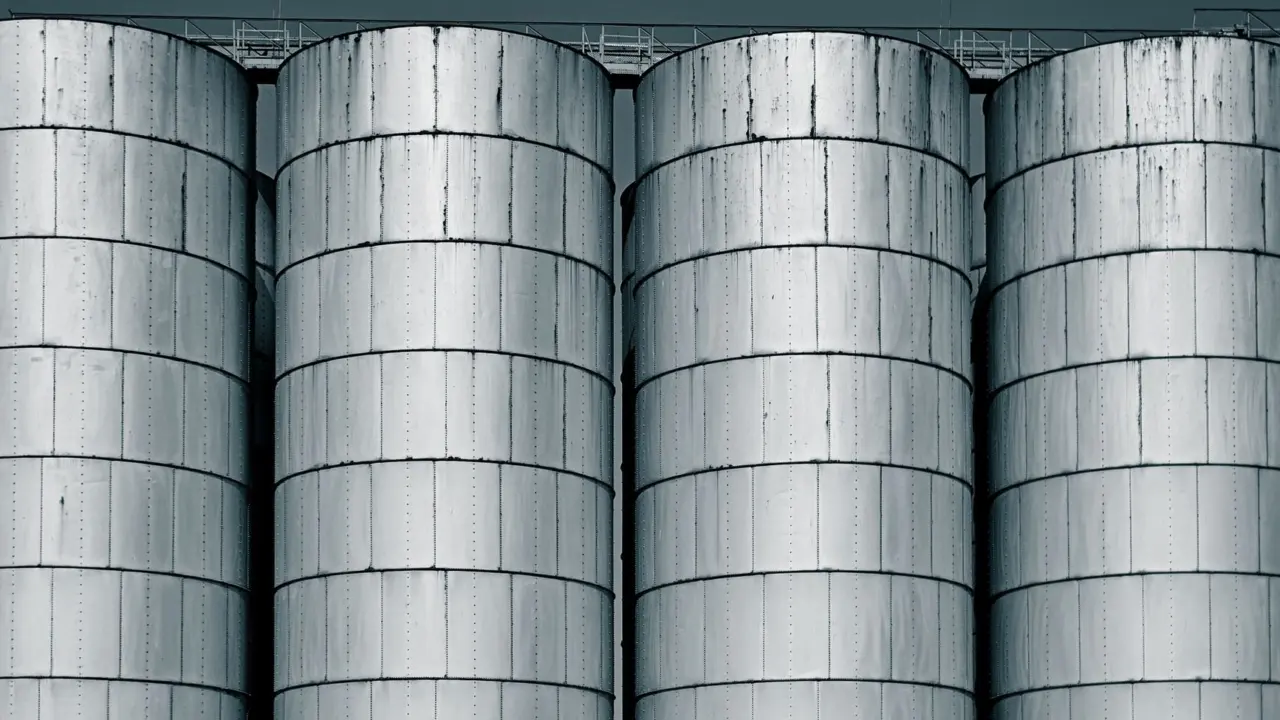
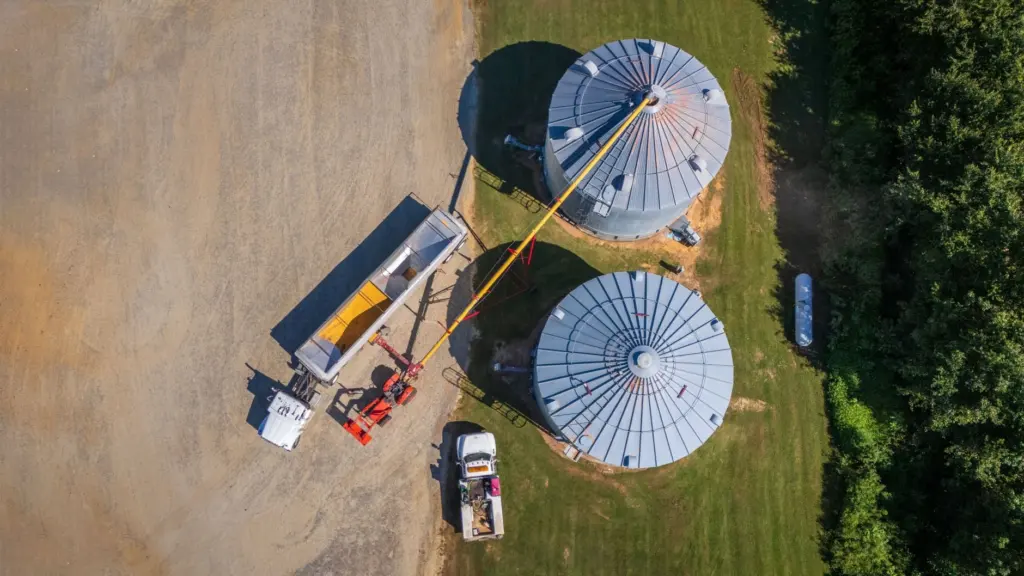
Shell material is chosen alongside the powder’s abrasiveness. Abrasive material may need special liners or materials to avoid wear, and the fabrication materials are part of the duty definition, together with safety and environmental considerations. A cylindrical shell with a conical hopper below it is the common arrangement seen at industrial sites, and hopper steepness is the variable the flow pattern controls.
Reducing caking in stored powder
Caking comes from conditions the powder meets in storage. Flow characteristics vary with temperature, humidity, pressure and storage time at rest, and storage time at rest is itself listed as a critical parameter.
- Test the storage condition. Ask the laboratory to measure the powder after the storage time and at the humidity and temperature expected in the silo.
- Limit time at rest. Mass flow moves all material during discharge, so it suits powders that gain strength while standing. Funnel flow leaves material stagnant along the walls.
- Control the environment. Where the test shows that humidity or temperature changes strength, treat the silo environment as a design input, not an operating afterthought.
- Size the outlet for the aged powder. A powder that has gained cohesive strength in storage needs outlet dimensions based on that stronger state.
Feeding and filling the silo
The feeder is part of the flow design. A poorly designed feeder can convert a mass flow bin into a funnel flow one, because it draws from only part of the outlet. Select the feeder after the outlet dimensions are fixed, and make sure it activates the full cross section.
Screw feeders are a common discharge choice, and the guide on how does a screw conveyor work explains the principle behind them. For filling, a conveyor or auger delivers material to the top of the bin, and the filling method belongs in the duty definition from the start.
Frequently asked questions
| Question | Answer |
|---|---|
| How do I design a silo for bulk solids? | Define the capacity, discharge rate, feeding method and materials, measure the powder’s flow properties, then set flow pattern, hopper angle and outlet size from the results. Judge success by discharge reliability, not storage capacity. |
| What tests are needed before designing a silo? | Cohesive strength, wall friction and abrasiveness, measured under representative handling conditions including temperature, humidity, pressure and storage time at rest. Library data from a similar powder carries significant risk. |
| How is the outlet size determined? | From the measured cohesive strength, which defines the dimensions needed to overcome arching and ratholing. The feeder must also activate the whole outlet cross section in mass flow. |
| Should I choose mass flow or funnel flow? | Funnel flow is a fit for coarse, free-flowing, nondegradable material when segregation is not a concern. For most other powders, mass flow is the safer route, since ratholing in funnel flow can reduce the usable live capacity to 10-20 per cent of total storage capacity. |
| How can caking in stored powder be reduced? | Test the powder under the expected storage time and environment, keep material moving with a flow pattern that avoids stagnant zones, and size the outlet for the powder in its aged state. |