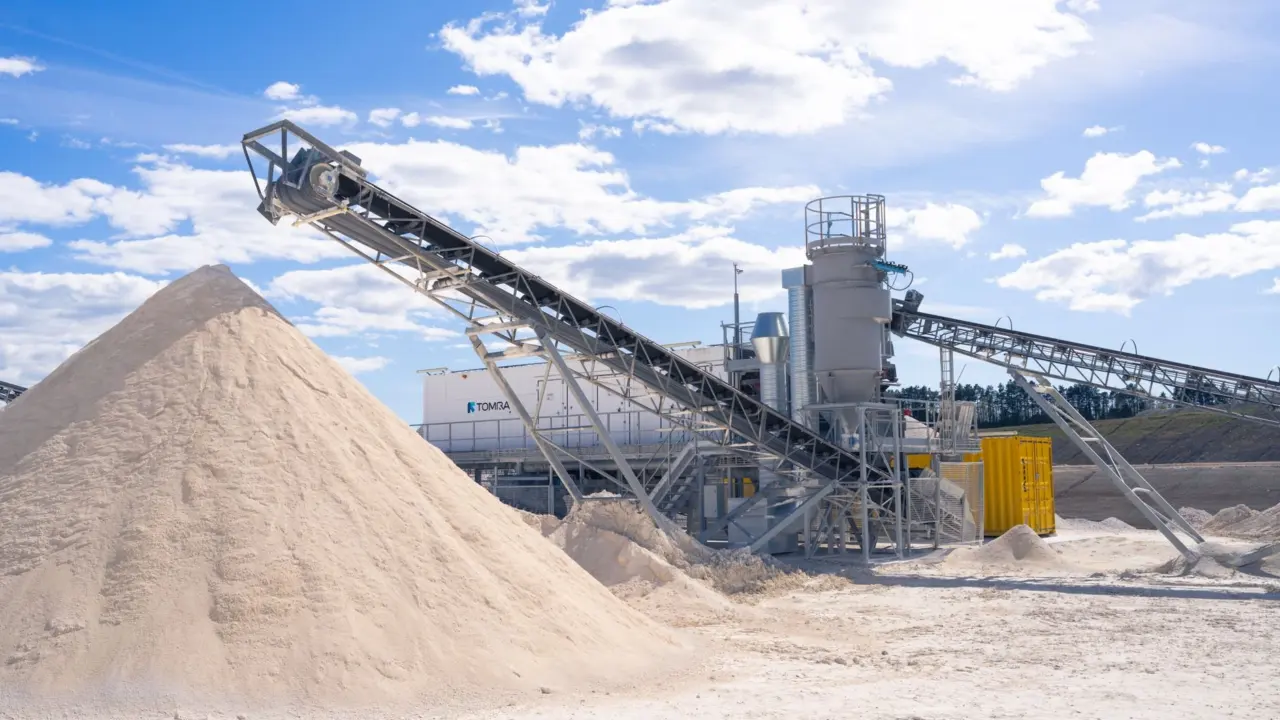
A belt conveyor for bulk materials suits high flow rates, but spillage, carryback and dust decide whether it runs cleanly. Size it from belt width, speed, trough angle and surcharge, then design below the theoretical maximum.
A common situation: a plant installs a belt that moves the tonnage on paper, then spends its time sweeping up under the transfer point. This guide works through those problems in order, within the wider field of powder and bulk solids handling.
Getting capacity right before you buy
The four inputs that set throughput
Troughed belt conveyor capacity comes down to how much material sits on the belt and how fast the belt carries it. Four inputs drive the calculation. Belt width and trough angle set the cross-section the belt can hold. Surcharge is how far the load heaps above that profile. Belt speed converts the cross-section into a flow. Bulk density then turns volume into tonnes, so a catalog capacity only applies to a material of similar density.
Reading catalog figures
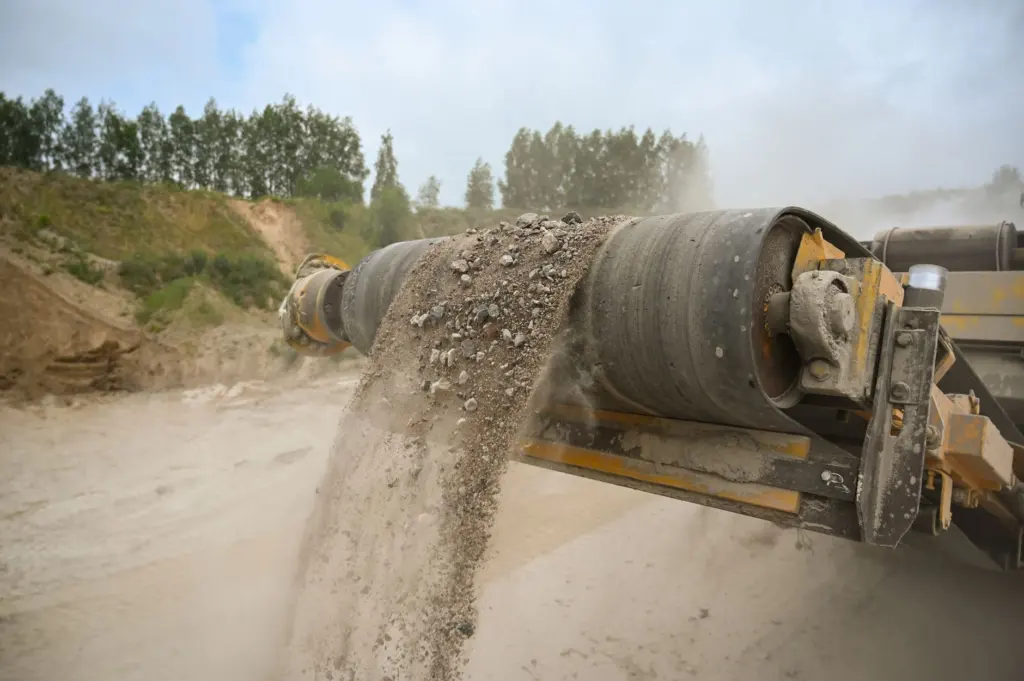
Manufacturer catalogs show how wide the range is. Palamatic lists belt widths of 300 to 1,200 mm and belt speeds from 0.63 m/s to 2.5 m/s for its standard conveyors. Titan lists troughed Model 114 units from 4 in to 48 in wide and Model 118 from 6 in to 72 in. Throughput climbs with size. CPM’s high capacity belt conveyor range runs from 6-8 t/h for the LC-35 to 18-20 t/h for the LC-80, quoted against a stated raw-material density. Confirm your own material’s density before comparing it with that table. At the other end, port belt systems are described at 1,000 TPH to over 10,000 TPH.
Design below the maximum
Treat the calculated maximum as a ceiling, not a target. Sentao states that it designs systems at 80-85% of theoretical maximum capacity. A belt loaded to its limit is the one most likely to spill at the edges, so leave headroom for surges and uneven feed.
Trough geometry, idlers and pulleys
The idler set shapes the load. For general bulk handling, the 35-degree troughing idler is described as the industry standard. Choose a different angle only when the material or the duty gives you a reason.
Heavier duty changes the idler choice. Titan’s Model 460 is a heavy-duty, large-volume conveyor with a 2 or 3 roller trough and 14 in roll diameter. Light-duty catalog units use smaller rollers, and Palamatic specifies 60 mm rollers.
The head pulley, or drive drum, scales with the belt. Palamatic’s standard maximum head drum diameter runs from 160 mm to 320 mm depending on belt width. Titan’s Model 118 pairs an 8 in drive pulley with a 4 in tail pulley. Match the drum to the belt specification rather than choosing it separately.
Stopping spillage at transfer points
Most spillage starts where material changes direction or speed, not along the carrying run. Engineered transfer chutes matter here. Zenith notes that transfer points using engineered chutes minimize material degradation, along with impact wear and freefall dust. A chute that centres the load on the belt keeps material off the edges.
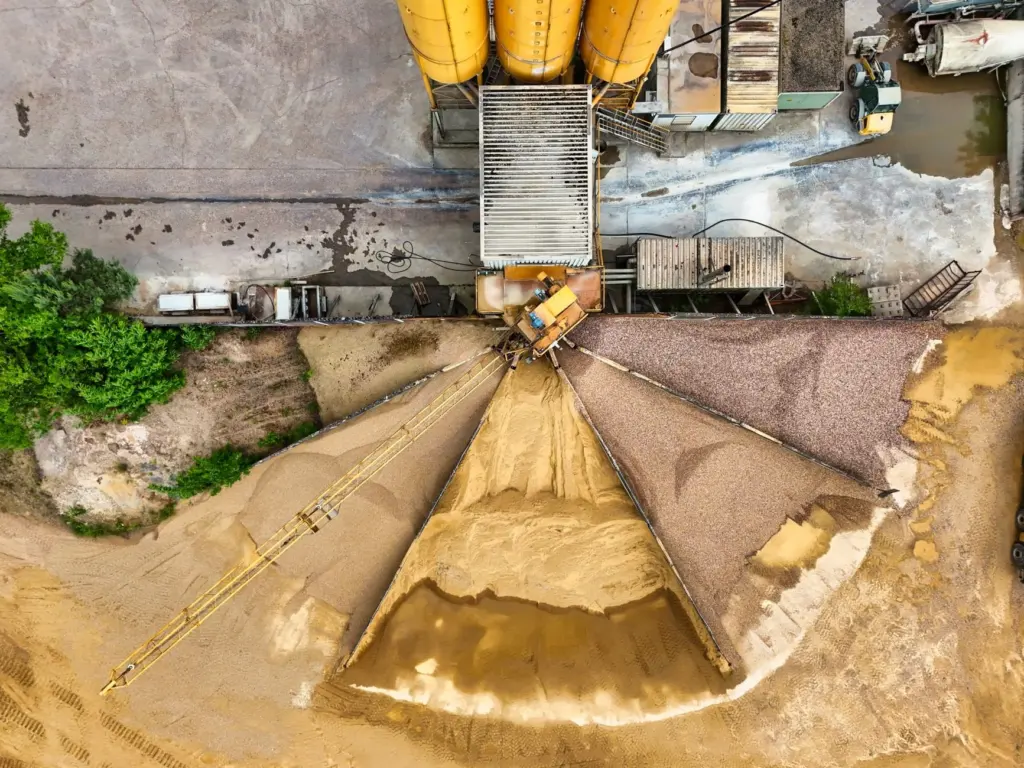
Blockage is the second route to spillage. A backed-up chute pushes material over the belt edge. CPM offers an optional anti-block sensor with an emergency stop switch when material build-up is detected at the outlet. That stops the belt before the pile reaches the floor.
- Fix the chute first. If spillage appears only at one transfer point, the chute geometry and loading position are the likeliest cause, not the belt.
- Add outlet monitoring for sticky or variable feed. A sensor suits material that tends to build up; it does little for a steady, free-flowing product.
- Add covers where wind or fines are the issue. Palamatic lists cowling, dedusting, weighing and scrapers as integrable options, so these can be specified from the outset.
Carryback and the belt cleaner
Material that stays stuck to the belt after discharge falls off along the return run and builds up under the conveyor. A belt cleaner at the head pulley removes it before it leaves the discharge area. Zenith describes multi-stage belt cleaners and scrapers fitted at discharge points. For sticky material, a single scraper is the weaker choice. A staged arrangement gives each stage a smaller job.
Diagnosing spill and dust problems
| Symptom | Likely cause | Planning use |
|---|---|---|
| Spillage at one transfer point | Chute geometry or off-centre loading | Rework the engineered chute before changing the belt |
| Material build-up at the outlet | Blockage pushing material back | Add an anti-block sensor with emergency stop |
| Material piling under the return run | Carryback past the head pulley | Fit multi-stage cleaners or scrapers at discharge |
| Fugitive dust along the run | Open belt carrying fines | Move to an enclosed or pipe belt |
| Dust at loading points | Freefall and impact at the chute | Use dry fog or water spray where wetting is acceptable |
The causes and fixes above follow Zenith’s port conveyor guidance and CPM’s belt conveyor specification.
Enclosed belts and dust
Enclosed belts reduce dust by keeping the load covered, so fines are not exposed to air movement. CPM’s design uses top and bottom covers to avoid product spilling out, and it targets flexible, efficient conveying of powdery and granular materials over short distances. Zenith says that for dusty or spillable fines, enclosed or pipe belt conveyors are selected to reduce fugitive dust and material loss.
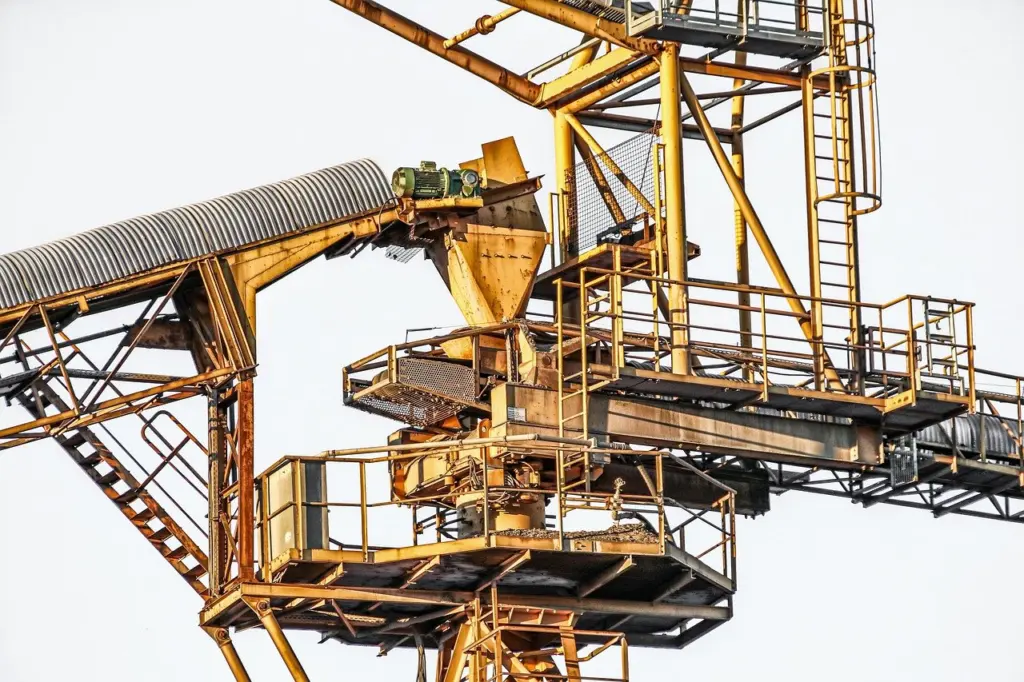
Covers do not remove dust at the loading point, where material falls onto the belt. For that, Zenith describes dry fog and water spray installed at transfer points and loading chutes to suppress dust. Spray suits materials that tolerate added moisture. For fine powders that must stay dry, choose enclosure and dedusting instead.
When a belt conveyor is the better choice
Choose a belt conveyor when throughput is high and the material is robust enough to ride open or under covers. Palamatic describes its design as suitable for applications dealing with high flow rates, and the port capacities quoted earlier show the scale a belt can reach.
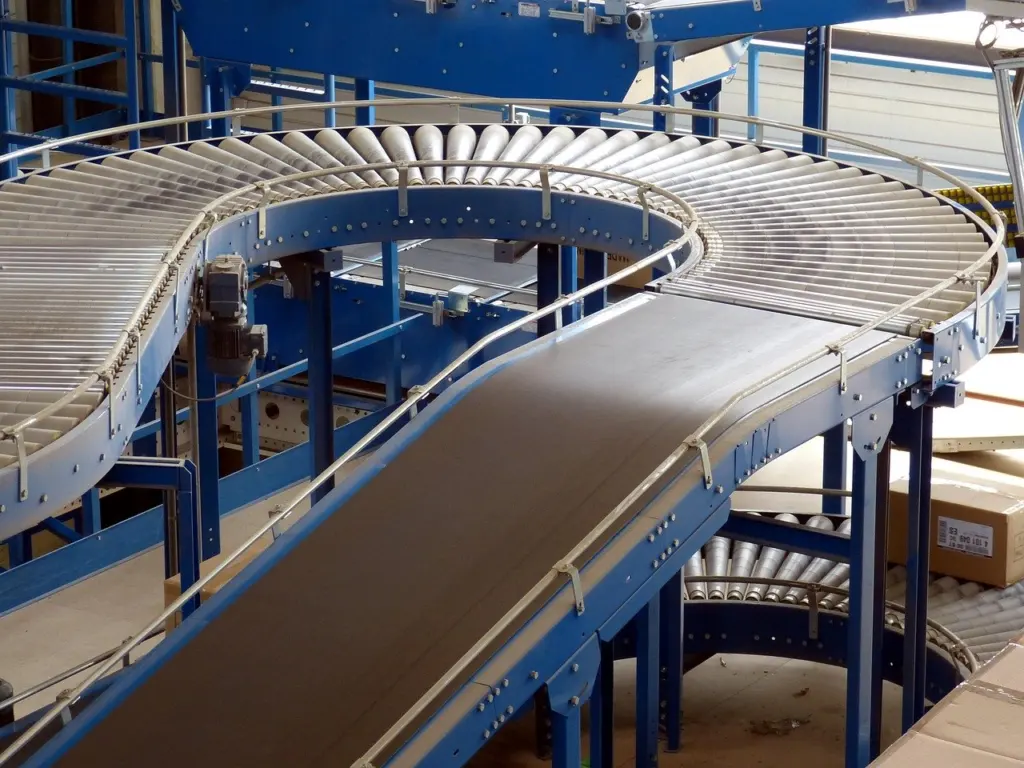
Weigh the alternatives by the material. Fine, dusty or fragile powders that must stay fully contained, or that need to turn corners freely, may be better served by pneumatic conveying system design than by an enclosed belt. Coarser, free-flowing material at volume favours the troughed belt, and an enclosed variant bridges the gap for short runs of powdery and granular product.
Frequently asked questions
| Question | Answer |
|---|---|
| Is a pipe conveyor truly spillage-free? | Zenith describes its pipe conveyors as offering 100% spillage-free transport. That is a vendor claim, so confirm it against your material and transfer points before relying on it. |
| How far can one troughed belt run? | Sentao states that its ST 2000 steel cord belt, rated 2,000 kN/m, supports center distances up to 3,000 meters without intermediate drives. Short light-duty units are built for far shorter runs. |
| What lump size and belt speed go together? | Sentao says a multi-ply belt handles materials up to 80 mm lump size at belt speeds of 1.5-3.5 m/s. It recommends the 35-degree idler for lump sizes up to 150 mm. |
| What drive power do small catalog belt conveyors use? | Palamatic lists three-phase motor power from 0.55 kW to 5.5 kW. Larger systems need a drive specified for the duty. |