How does a ball mill work? A horizontal cylinder rotates, lifts grinding media, and lets it fall onto the material, grinding by impact and friction. Speed relative to critical speed and the media fill level decide how well it grinds.
When a mill turns but grinds poorly, the first checks are speed, fill and media size, because each changes how the media move and strike. This guide covers those controls as one part of powder processing unit operations, and ends with a direct comparison against bead mills.
What happens inside the drum
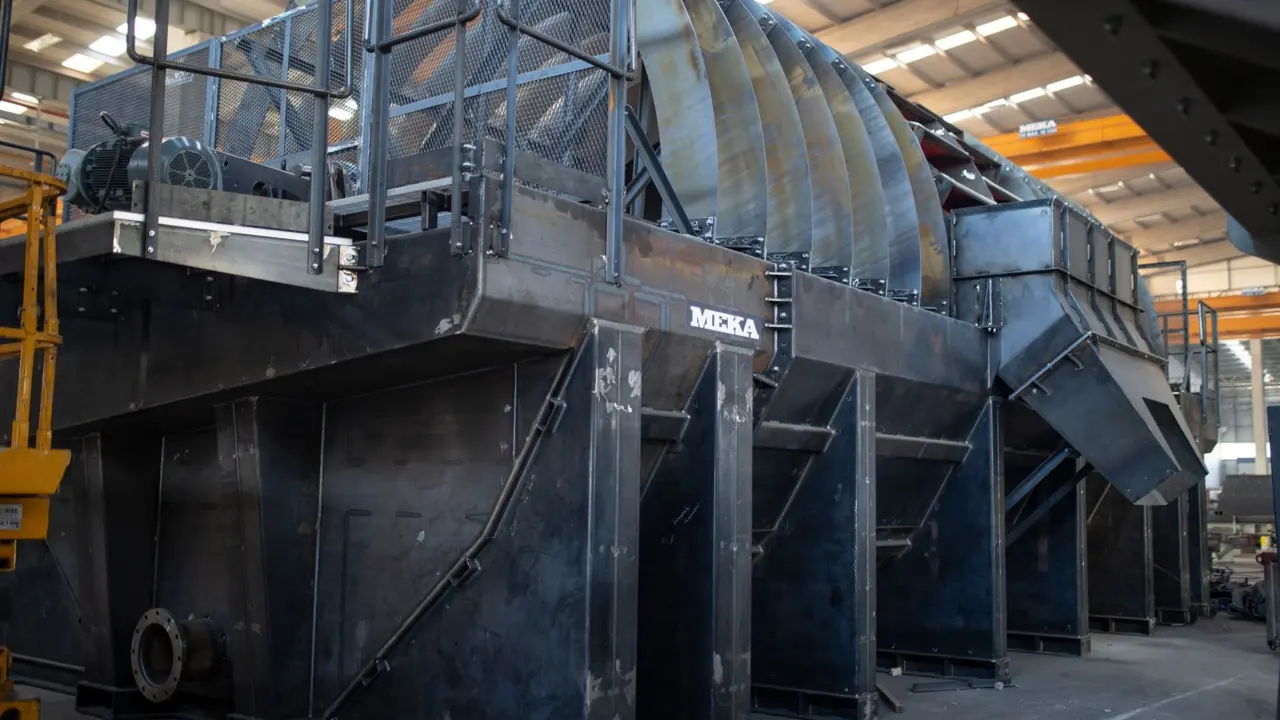
A ball mill is a cylinder that rotates on its horizontal axis and contains steel or ceramic balls. As the shell turns, the balls inside lift and then cascade down, and the material caught between them is ground by impact and friction. One manufacturer explanation puts it simply: the balls are lifted and then fall, creating an impact force.
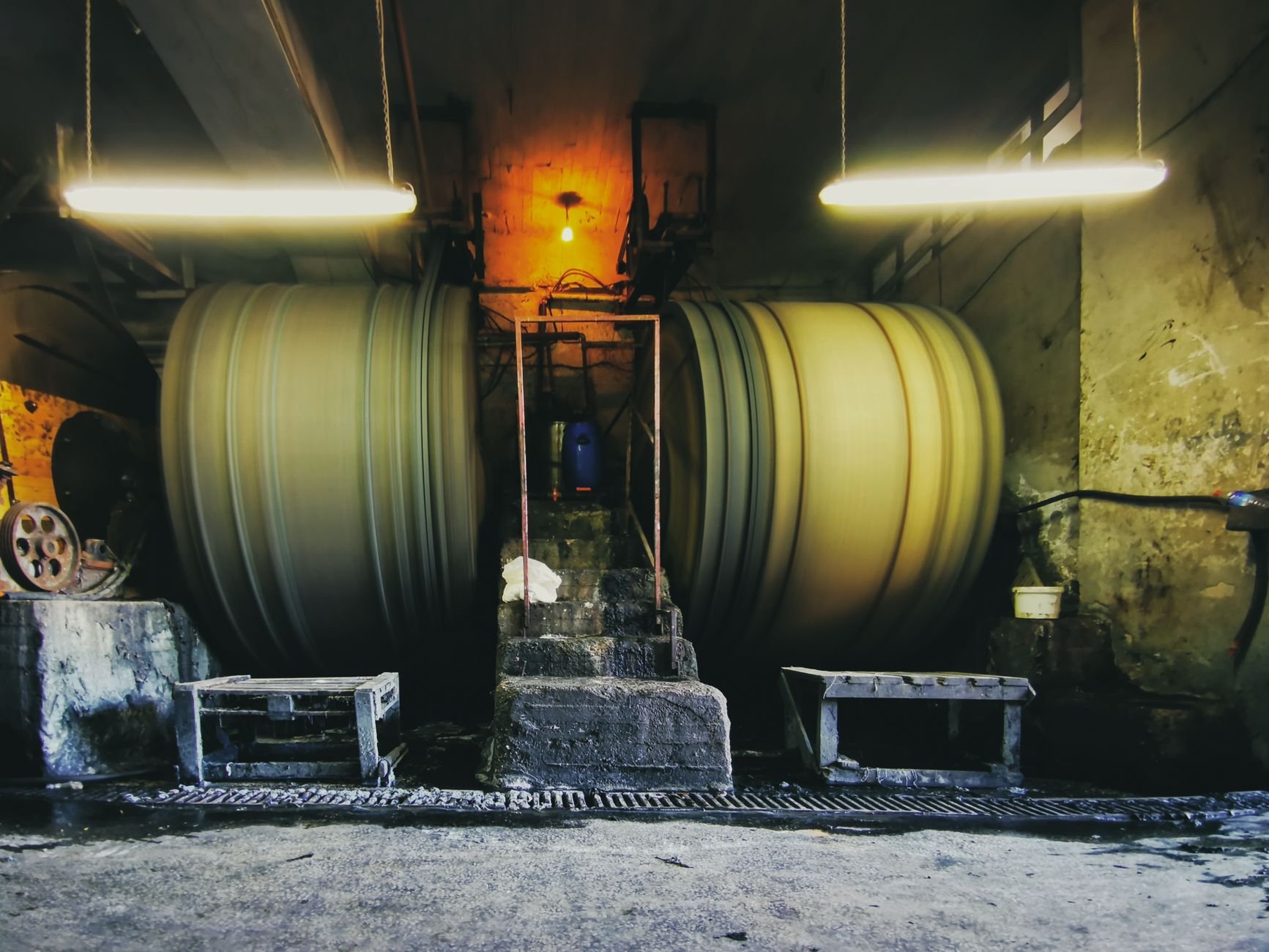
Impact is not the only mechanism. Laboratory mills are described as using the collision, friction and mixing effect of mill media to reduce material to micron or nano level. In dry grinding the work comes from the kinetic energy of a grinding medium like steel or ceramic balls. In practice, the media are the tool and the rotating shell is only the means of moving them.
Four common misunderstandings
Most poor results trace back to one of the beliefs below. The table sets each against what the evidence supports.
| Common belief | What is supported | Planning use |
|---|---|---|
| Faster rotation is always better | Higher rotation speed generally gives a more efficient grind, but adds wear. Speed relative to critical speed also decides whether the media cascade, cataract or centrifuge. | Treat speed as a trade-off between grinding rate and wear, not a setting to maximise. |
| A fuller mill grinds more | A higher filling ratio generally improves efficiency but can overload the mill. Both underfilling and overfilling reduce grinding efficiency. | Aim for the middle of the recommended fill range and adjust from observed performance. |
| Bigger balls always grind better | Larger media excel at breaking coarse particles. Smaller media supply the surface area needed for fine grinding. | Match ball size to the feed and to how fine the product must be. |
| Any media will do | Higher-density media give more impact energy per unit volume. Forged steel is about 7.8 g/cm3, while ceramic media range from 3.6 to 6.0 g/cm3. | Choose media for impact energy first, then check contamination limits. |
These points come from a ball mill process explanation and a grinding media selection guide.
Media motion regimes and critical speed
Mill speed relative to critical speed sets how the media move, and the guide on media selection notes that this influences whether cascading, cataracting, or centrifuging occurs. The regime matters because grinding only happens when the media keep lifting and then striking or rolling over the bed of material.
Cascading, cataracting and centrifuging
- Cascading: the media are lifted along the shell and tumble down over the bed. Grinding comes mainly from rolling contact, friction and lower-energy impact.
- Cataracting: the media are thrown further and land on the bed in a more energetic fall. This favours impact, which is the better action for breaking coarse particles.
- Centrifuging: the media stop falling and are carried round with the shell, so the lift-and-fall action that does the grinding is lost.
Why mills run below critical speed
Critical speed is the reference point against which operating speed is judged. A mill is run below it so that the media keep falling instead of centrifuging. Within that limit, a higher speed of rotation generally results in a more efficient grinding process, though wear increases. The practical rule is to raise speed only as far as the extra grinding justifies the extra wear on media and shell.
The mill liner and lifters
The shell lining is part of the motion control. The mill liner profile influences the lift characteristics and media trajectory. A change of liner profile can therefore shift the effective motion regime at the same rotation speed, so liner condition belongs in any investigation of falling performance.
Media size, fill level and material
Media are chosen on three attributes: size, how much of the mill they occupy, and what they are made from. Larger balls are more effective for breaking large particles, so coarse feed calls for larger media and fine finishing calls for smaller ones.
Fill level
The optimal media fill level typically ranges from 30% to 45% of mill volume. That is a working range, not a target to push to the top. Below it the media do too little work, and above it the mill can overload. Small laboratory planetary mills are described as running with one-third of the grinding media filling the pot.
Media material
- Forged steel: high-carbon steel balls with density 7.8 g/cm3 and hardness HRC 58-65. They give the highest impact energy of the options listed here.
- Ceramic (alumina, zirconia): density 3.6-6.0 g/cm3 and hardness 80-90 Rockwell A. These suit work where steel is unsuitable and impact demands are lower.
- Stainless steel: 304/316 grades, HRC 55-62, density 7.9 g/cm3, used in food and pharmaceutical applications.
These values are listed in the media selection guide. Because higher-density media deliver greater impact energy per unit volume, the density figures are a quick way to compare how hard each option will hit.
Where the Bond work index fits
The Bond work index is a material property describing how hard a feed is to grind. It is used when choosing a starting media size: Bond’s formula considers the feed size, work index, and mill dimensions. Treat the result as an initial selection to be tuned against product measurements rather than a final answer.
What controls the final particle size
Final particle size is set by several controls acting together, not by one dial. Media size and fill level, rotation speed and the liner profile determine how the media move and strike. The feed’s grindability, expressed through the work index, determines how much work is needed for a given reduction.
The grinding environment matters too. In wet grinding the liquid medium helps to reduce friction, enhances particle size reduction. Dry grinding, lacking liquid, can lead to increased dust and the potential for static charges, which matters for any powder handling downstream.
Heat is a further limit. High-speed friction in laboratory mills generates a lot of heat, which needs to be equipped with cooling system, so heat-sensitive products need cooling built into the setup. Once adjustments are made, verify the outcome by measurement. Particle size analysis methods show whether a change in media or speed actually moved the distribution.
Ball mill vs bead mill
Both machines grind with loose media, so the difference is mainly in media size and the fineness being targeted. The media-size relationship decides the split: larger media break coarse particles, and smaller media provide the surface area for fine grinding. A bead mill uses small beads such as zirconia, which belongs to the ceramic media family above, and so sits at the fine end of that scale.
- Choose a ball mill when the feed is coarse and needs breaking first, when steel or ceramic balls in a larger size range suit the job, and when you want to vary fill level and speed to tune the grind.
- Choose a bead mill when the product must be finished at very small sizes and smaller media are the right tool. Laboratory planetary mills with small media are described as reaching a micron to nanometer range with a uniform particle size distribution.
- Decide wet or dry early: wet operation reduces friction and aids reduction, while dry operation brings dust and static concerns that need controls.
A coarse-to-fine job can use both, with a ball mill doing the bulk reduction and finer media finishing. If the feed is dry and brittle, an impact machine may also compete; how does a hammer mill work explains that alternative.
Frequently asked questions
| Question | Answer |
|---|---|
| Does a ball mill run wet or dry? | Either. Wet grinding uses a liquid medium that reduces friction and aids size reduction, while dry grinding relies on the kinetic energy of the balls and can raise dust and static risks. |
| Which ball material suits food or pharmaceutical work? | Stainless steel media in 304 or 316 grades are listed for food and pharmaceutical applications. They have a density of 7.9 g/cm3 and hardness of HRC 55-62. |
| Can a ball mill reach nanometer sizes? | Laboratory planetary ball mills are described as grinding to the micron or nanometer range with a uniform size distribution. Large production mills are not claimed to do the same. |
| Does grinding heat the product? | Yes. High-speed friction produces heat in laboratory mills, so a cooling system is needed for heat-sensitive material. |