| Control or measure | Supported effect | Planning use |
|---|---|---|
| Impeller speed (mechanical shear) | High mechanical shear from the mixing tools produces compact granules. | Treat speed as a densification lever. Change it deliberately, one setting at a time, so any shift in granule size or density can be traced to it. |
| Liquid quantity and evenness | Insufficient wetting gives weak granules. Excessive or uneven addition gives oversized agglomerates or an overly wet mass. | Plan for metered, well-distributed addition rather than quick bulk additions. |
| Processing time | Time is a key parameter. Granule growth reflects the balance of wetting, collisions, consolidation and breakage. | Keep wet massing inside a validated window instead of running on appearance alone. |
| Granulation endpoint | It must be determined for reproducible granules from batch to batch, and it is product-specific. | Establish and validate it for each product. Do not carry a value across products. |
Effects summarised from the Romaco overview of high-shear granulation and the Glatt high shear granulation page.
The high shear granulation process blends dry powder, adds liquid binder, then densifies the wet mass with an impeller and chopper. It is stopped at an endpoint that must be validated for each product, not copied from another.
This page works through the controllable settings of a single bowl. For the wider context, see our guide to powder processing unit operations. To compare this route with others, read about the types of granulation. For a dry alternative that uses no liquid, see what is roller compaction.
Which parameters matter most
Manufacturers name five key parameters for granule outcome: impeller speed, chopper speed, binder addition rate, liquid quantity and processing time, as the Romaco technical blog lists them. No public source reviewed here ranks them for every formulation. The practical consequence is that a recipe is a combination of settings, and the weight of each depends on the product.
Binder level and liquid quantity
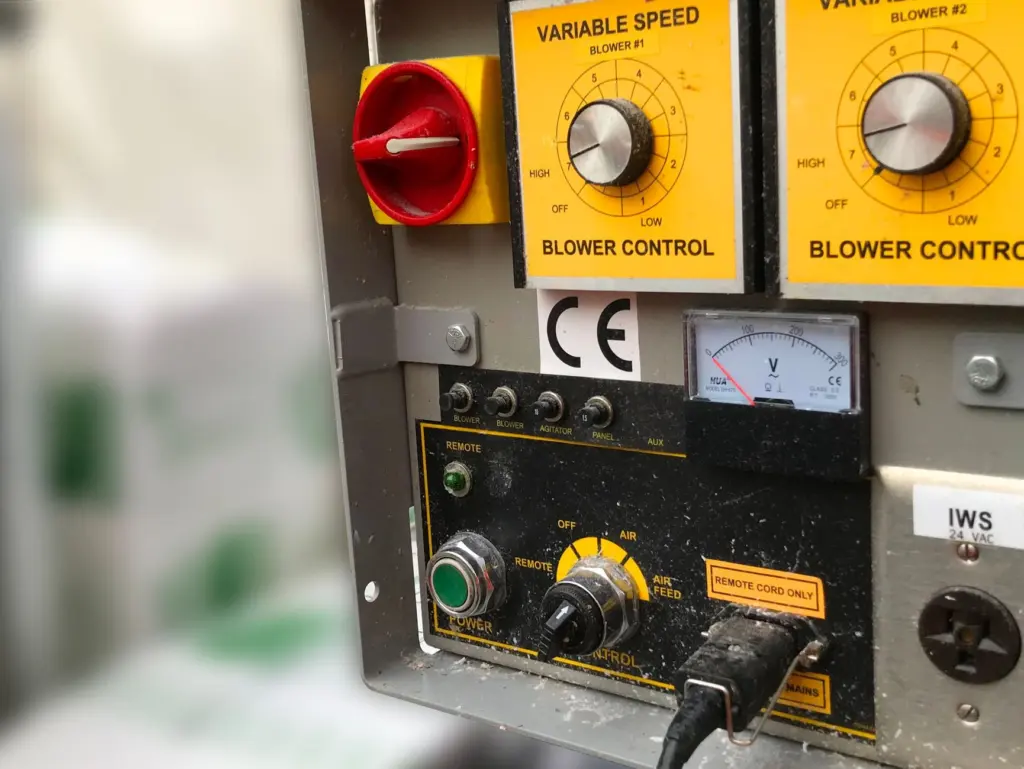
Binder is the lever with the clearest published evidence. In a peer-reviewed design-of-experiments study using a two-factor, three-level full factorial design, both variables had a significant impact (p < 0.05) on the granules. Only the binder concentration influenced tablet friability. The highest desirability (0.985) came at the medium PVP level with low CCS.
Read that result as a pattern, not a target. It shows that a middle binder level can outperform both extremes in a designed study. It does not give a binder percentage to copy. Use it to justify screening several binder levels in a small experiment before fixing a recipe.
Impeller and chopper settings
The impeller is the main source of mechanical shear. Glatt states that the high mechanical shear of tools rotating at the bottom or top gives compact granules. L.B. Bohle similarly describes an agitator blade whose high shearing and compacting effect forms dense granules. The decision this supports is simple: if granules come out too soft or porous, shear is a lever to examine. Impeller speed has no single typical value that holds across products, so vary it within a designed range.
The chopper shears granules and removes air, according to Fluid Air. Because chopper speed is listed as its own key parameter, record it separately from impeller speed in every trial. Otherwise two changes get blended into one result.

Processing time
Time is both an input and a possible stop signal. Longer wet massing gives more opportunity for collisions, consolidation and breakage, and these compete with wetting. Fix a time only after the endpoint has been established, and treat it as a guard rail around the endpoint measure.
Setting and reading the granulation endpoint
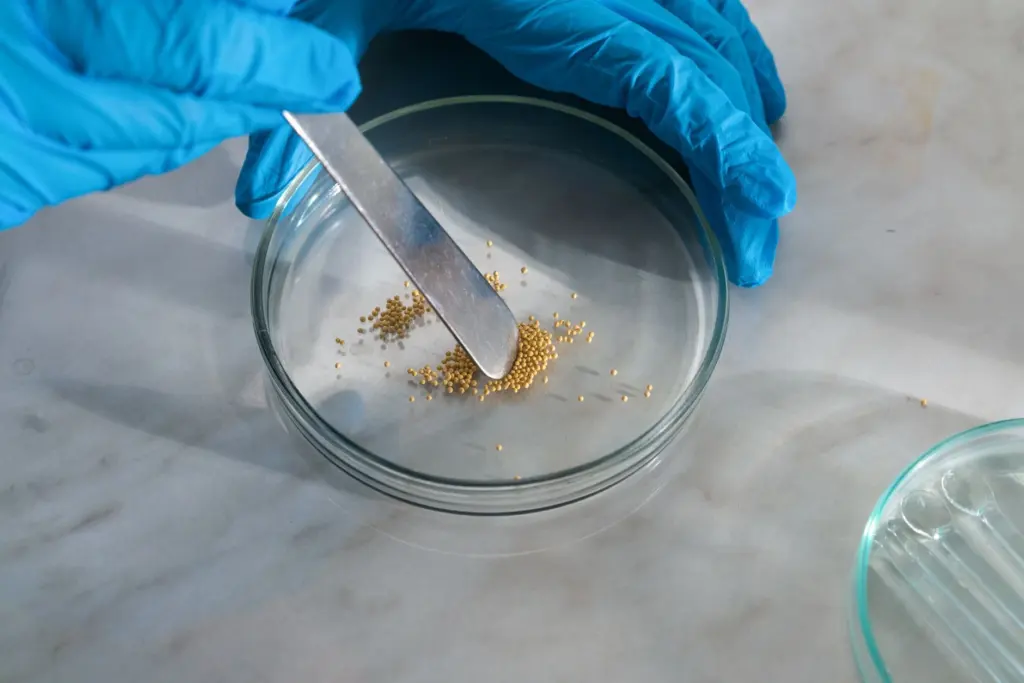
The granulation endpoint is the point at which wet massing stops, and it determines whether one batch matches the next. Romaco states that the endpoint must be determined to achieve reproducible granule properties from batch to batch. The target is defined by the desired granule size and density, as Fluid Air describes it.
In practice the stop signal is a measured process variable tied to that target. Romaco notes that endpoint determination may use defined process parameters such as mixing time and power consumption. L.B. Bohle states that granulation can be controlled according to time, quantity or torque.
- Time-based control. This is the simplest option and suits a process whose feed behaviour is stable. It cannot react if the incoming material changes.
- Quantity-based control. Here the amount of liquid added defines the stop. It fits recipes where binder amount is the dominant variable.
- Torque or power-based control. This follows the load on the impeller as the mass wets and consolidates. It responds to what the mass is doing rather than to the clock.

Whichever signal you choose, the rule from Romaco still applies. The endpoint should be established and validated for the specific product rather than based on a single universal value. A power reading that works for one formulation says nothing reliable about another, so each product needs its own validated window.
Causes of weak granules and oversized lumps
Oversized lumps are usually a liquid problem. Romaco states that excessive or uneven liquid addition may lead to oversized agglomerates or an overly wet mass, while insufficient wetting can result in weak granules. The two failures sit at opposite ends of the same lever, which is why even distribution matters as much as total quantity.
Growth is not decided by liquid alone. Granule growth is influenced by the balance between wetting, particle collisions, consolidation and breakage. Several practical checks follow from this.
- Uneven distribution. Local wet spots can seed lumps even when the total liquid is correct. A metered spray nozzle improves on older addition methods, as Glatt explains, by giving a better-metered distribution and a more uniform granulate.
- Over-extended wet massing. Running past the validated endpoint adds consolidation. This is the usual meaning of over-granulation, and it is why the endpoint needs a defined measure.
- Under-wetting. If granules are weak, increasing run time alone may not repair them. Look at wetting first.
How the process runs, stage by stage
Romaco describes the process as typically comprising four main stages: dry mixing, binder addition and wetting, granule formation and size control, and endpoint monitoring with wet-mass discharge. Understanding the sequence explains why the controls above act where they do.
Dry mixing and binder addition
During dry mixing, the rotating impeller moves the powder bed in a circulating mixing pattern before any liquid is introduced. Fluid Air notes that the powders are spun into a vortex. A liquid binder or water is then added so particles will stick together. The work takes place in a closed vessel equipped with mixing tools and a chopper, according to Glatt, with the particles pulverized and mixed while binder is added.
Wet massing and densification
In wet massing, the impeller consolidates wetted particles into granules while the high-speed chopper shears them and removes air. This continues until the desired size and density are achieved. The densifying action is why the granules end up compact. Final steps are endpoint monitoring and discharge of the wet mass.
How bowl scale affects the process
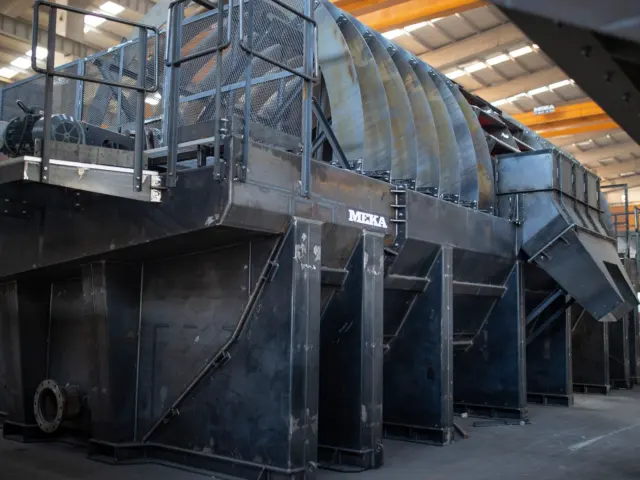
High shear granulators are offered at laboratory and production scale, as L.B. Bohle’s range shows. The machine itself becomes large at production size. The manufacturer lists its GMA 70 model at 1800 x 1300 x 2500 mm (LxWxH), which gives a sense of the floor space and headroom a production unit needs.
Public sources reviewed here do not give a scale-up rule for impeller speed or binder amount. The decision follows from the endpoint requirement instead. Because the endpoint is validated per product, treat a laboratory endpoint as a starting hypothesis and confirm it in the larger bowl before relying on it. Compare granule size and density rather than the raw power reading alone, since the size and density are what the endpoint is meant to deliver.
Frequently asked questions
Are high shear granules denser than fluid bed granules?
Yes. Glatt states that granules produced by high shear granulation are denser than those achieved through the fluid bed process.
Can binder be added without a spray nozzle?
Yes. Fluid Air notes that liquid can be added to the product using a pump or pressurized container.
What do researchers measure on the finished granules?
The binder study analysed dried granules for density, granule size and flowability, then compared them across binder and CCS levels.