Industrial dust collection systems are best specified in a fixed order: decide how dust is captured at each process point, then profile the dust, then pick the collector. Cartridge units suit fine, dry, uniform dust; baghouses suit abrasive or heavy loading.
The rest of this guide follows that order, from capture and ductwork through filter media, cleaning and monitoring. If you are still comparing families of equipment, begin with the overview of types of industrial dust collectors and return here to place the collector within the line.
Start with the decision order
The first decision in dust collection is how dust will be captured, not which collector to buy. A.C.T. Dust & Fume Collectors advises starting by analyzing particle size, loading rate, temperature and how you will capture the dust. Quatro Air lists a slightly broader set of selection factors: the type of dust, the volume produced, the size of the workspace and regulatory requirements. Together they give you five checks to run before any model is considered.
- Capture method. Decide whether dust is caught at the point where it is generated, or whether a room or area is being cleaned. Capture at the source sets how much air the collector must move and how it is ducted.
- Particle size and uniformity. Fine, dry particulate that is mostly uniform in size points toward cartridge media. Mixed, coarse or abrasive dust points toward a baghouse, possibly with a cyclone ahead of it.
- Loading rate. A heavy, continuous dust load favours a collector built for heavy loading. A light, intermittent load gives you more freedom to choose a compact unit.
- Temperature. Process air temperature limits which filter media are suitable, so record it at the capture point, not at the collector inlet alone.
- Workspace and rules. Floor area, height and regulatory requirements decide where the collector can physically sit and what protection it must carry.
Work through those five in order and the collector choice usually narrows to one family. A collector chosen first and then fitted to the process tends to inherit the wrong capture method, and no filter upgrade repairs that later. The sections below take each stage in turn, beginning with where dust actually comes from on a powder line.
Dust collection as part of the powder handling line
Dust collection belongs to the powder handling line itself, not just to the building. Dust is released wherever powder moves or is displaced: at bag dump stations, transfer points, conveying branches and the vents of storage bins. Each of those points is a separate capture problem, and the collector is only the last element in the chain.
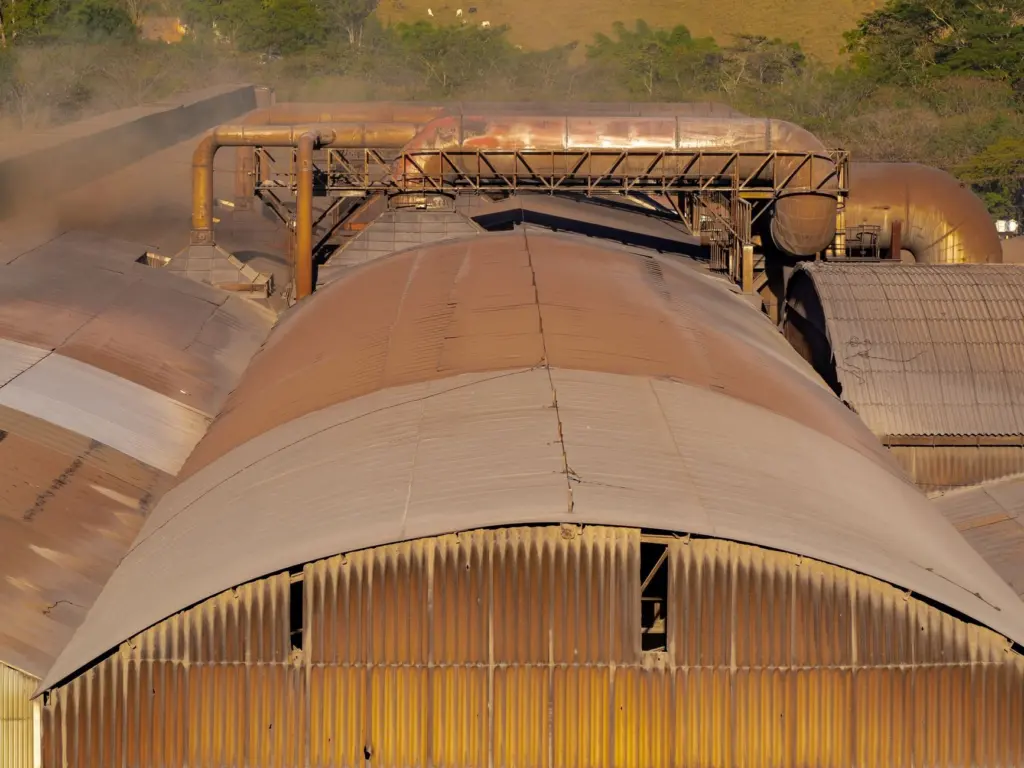
Quatro Air describes source capture as collecting dust directly at the point where it is generated. For a powder line, that means a hood or enclosure at each dust-producing step, joined by ducting to the collector. Capture at the source keeps dust out of the room air, so it is generally the first choice over trying to clean the whole building atmosphere.
Where upgrades tie to process points
A collector is rarely upgraded in isolation. Adding a bag dump station, extending a conveying line or changing the powder all alter what the collector must handle. Treat each process change as a trigger to revisit the five checks above, because a change in particle size or loading rate can move the best answer from one collector family to another.
- New or relocated dump station. This changes the capture point, so review the hood and the branch duct before looking at the collector. The dust collection hood design guide covers the capture side.
- New storage vessel. A bin or silo that receives powder needs its own filtration at the vent. A bin vent filter is the usual local answer, and it can sit alongside a central system rather than replace it.
- Change of powder. A finer or more abrasive material may mean different filter media. Review the filter section below before keeping the existing collector type.
With capture points identified, the next question is what the equipment does with the captured air.
How an industrial dust collector works
An industrial dust collector pulls dust-laden air through a filter or separator, retains the dust, and returns cleaned air. The stage-by-stage mechanics are covered in the guide on how does an industrial dust collector work. The sequence on a typical powder line looks like this:
- Capture the dust at the hood or enclosure where it is released.
- Carry the air through ductwork to the collector.
- Remove larger particles first where a pre-separator such as a cyclone is fitted.
- Filter the remaining dust from the air on the filter media.
- Clean the filters in place so dust does not build up and block them.
- Move the air with a fan, then discharge the cleaned air.
Quatro Air notes that cyclone systems use centrifugal force to separate larger particles from the air, while baghouse systems use fabric filter bags to trap dust particles. The same source warns that accumulated particles can clog systems, reduce efficiency and increase maintenance costs. That warning explains why cleaning and monitoring get their own sections later: the collector’s job is a continuing balance between capture and clean-down.
Fan, motor and rated airflow
The fan and motor are the airflow source, and their ratings are the first numbers you see on a collector’s data sheet. Laguna’s published line gives a sense of how rating and motor size are presented. Its T|Flux 5 cyclone is listed at 4295 CFM with a 5HP, 220V motor and 22.4 full load amperage. The T|Flux 10 cyclone is listed at 6957 CFM with a 10HP, 220V motor and 30 full load amperage. The X|Flux 10HP is listed at 8070 CFM with a 10HP, 220V motor and 28 full load amperage.
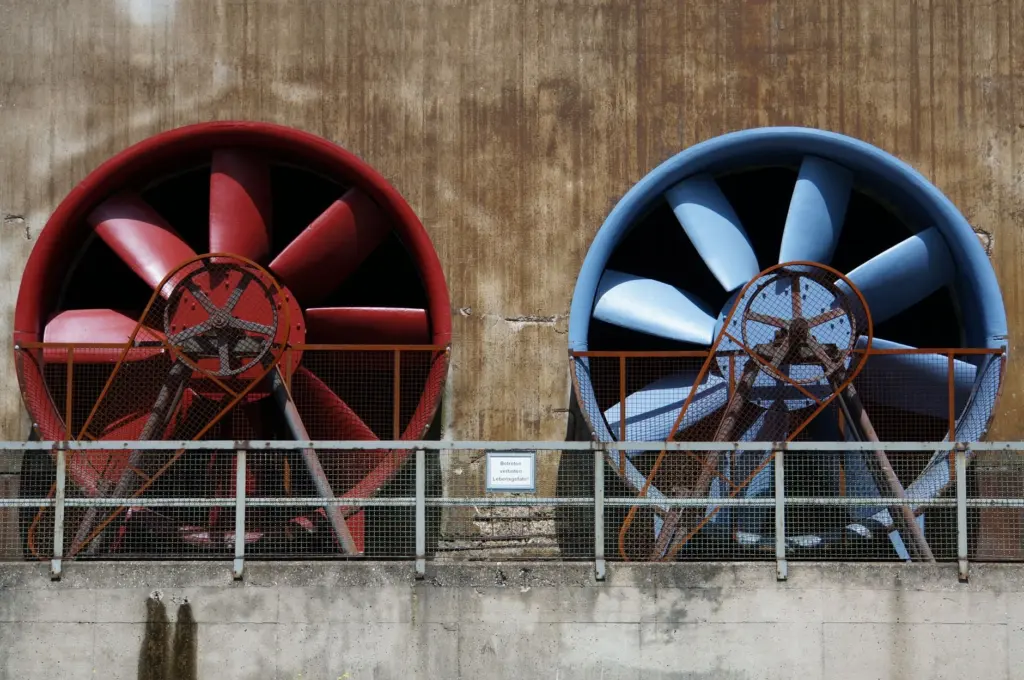
Treat those figures as manufacturer ratings for a particular unit, not as the airflow your plant will see. The air actually moved depends on the ducting and filter resistance it works against. For the calculation side, see how to size a dust collector, and use the rating only as a starting comparison between models.
Choosing between collector types
The choice between a baghouse and a cartridge collector comes down mainly to the character of the dust. A.C.T. says cartridge collectors suit fine, dry particulate that is mostly uniform in size, and warns against them for abrasive dust that would wear through the cartridge media quickly. Quatro Air adds that cartridge collectors and cartridge filters are effective for fine dust, whereas baghouses may need more space and maintenance than cartridge systems.
Baghouse
A baghouse filters the air through fabric bags, and it is the safer default when dust is abrasive or the loading is heavy. The baghouse dust collector guide covers the design in detail. Choose a baghouse when:
- Dust abrades. Bag fabric tolerates abrasive dust better than cartridge media, according to the A.C.T. comparison.
- Loading is heavy. A baghouse is the family the same source associates with heavy loading.
- Space and upkeep can be accommodated. The trade-off is a larger footprint and more maintenance than a cartridge unit.
Cartridge collector
A cartridge collector suits fine, dry, uniform dust where footprint matters. The cartridge dust collector guide goes deeper into construction and applications. Choose a cartridge unit when:
- Dust is fine and dry. This is the profile cartridge media is described as handling well.
- Particle size is consistent. Mostly uniform particles are easier on cartridge media than a mixed, coarse stream.
- Space is tight. Quatro Air frames baghouses as needing more space and maintenance, which is where a cartridge unit gains ground.
Cyclone as a pre-separator
A cyclone removes larger particles by centrifugal force, and it is often used ahead of a filter collector. A cyclone dust separator earns its place when the stream carries a coarse fraction that would otherwise load the filter media. It does not replace the filter for the fine fraction, so decide whether the coarse load justifies an extra stage before adding one.
Wet collection
When dry filtration is not the right route for the dust or the process, wet scrubber dust collection is the alternative family to review. Run it through the same five checks as the dry options, so the comparison stays like for like.
Once a family is chosen, the filter media and its area become the next specification points.
Filter media and filter area
Filter media is the working surface of the collector, and its area and rating say more about expected performance than the collector’s outer dimensions. Laguna’s I|Flux range shows how filter area is presented as a headline specification. The I|Flux 5 Elite is listed with a doubled filter area of 286.3 ft² and a 5HP TEFC motor, and the I|Flux 10 Elite with a doubled filter area of 409 ft² and a 10HP TEFC motor. Both are marketed with CE and NFPA safety certifications.
The comparison that matters is airflow against filter area, which is the idea behind the air to cloth ratio. A collector asked to pass a lot of air through limited media works its filters harder. Larger filter area at the same airflow gives the media an easier job.
Bag versus canister ratings in catalog listings
Catalog ratings show how media type and rated particle size differ between collector styles. Global Industrial’s listings give two examples. A canister collector is listed at 1200 CFM maximum airflow, 2 micron particle size and a 6.4 in air inlet. A bag collector from the same listing is rated at 650 CFM, 30 micron particle size and a 4 in air inlet.
The difference in listed particle size is the useful signal. The canister unit is rated for much finer particles, and the bag unit for coarser ones. These are catalog ratings, so use them to understand what each style is built to catch, and ask the manufacturer for performance data on your own dust before specifying.
Capture hoods and ductwork
The capture hood and ductwork decide whether the collector ever sees the dust. A well-chosen collector cannot compensate for a hood that sits too far from the release point or a duct run that starves a branch of air. The dust collection hood design guide covers hood placement and shape, while dust collection duct design covers routing and balance.
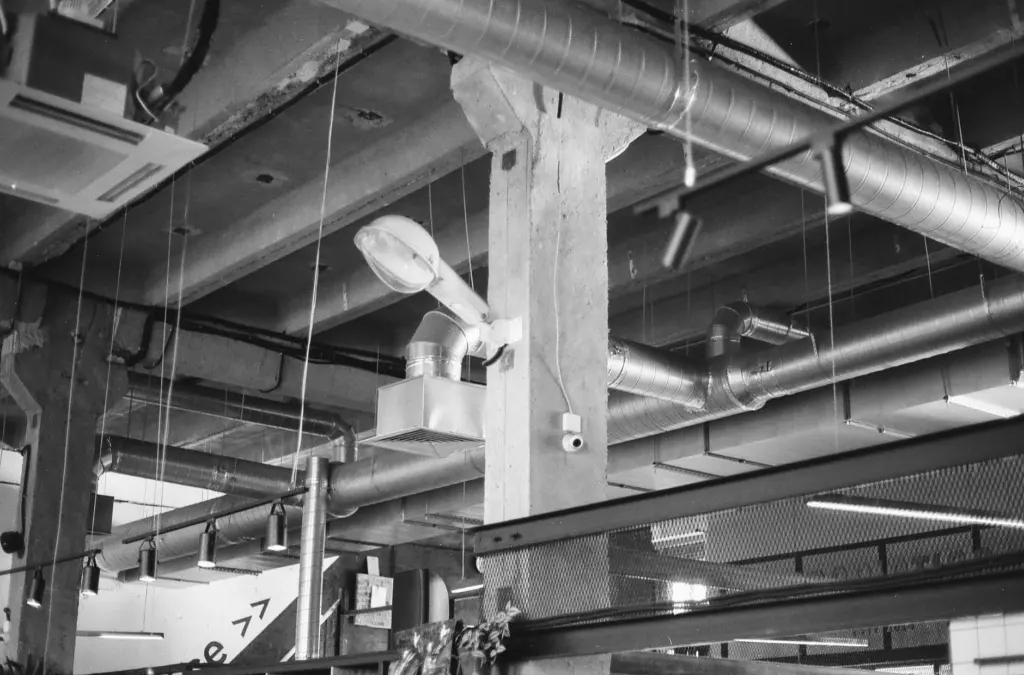
Ahead of any collector purchase, check these capture-side points against your line:
- One hood per release point. Each dust-producing step needs its own capture, joined to the main duct by a branch.
- Hood fit to the task. A hood has to suit how the powder is released, whether poured, dropped or conveyed.
- Branch access. Ducts need to be reachable, since long runs and bends are where dust deposits and blockages show up.
Exhaust ductwork should be clearly distinguished from other ventilation. Supply-air ducts, which bring air in, look similar to exhaust ducts that carry dust out, and mixing them up on drawings or on site causes errors.
Duct and hood losses feed straight into how hard the fan and filters work. That relationship shows up in the pressure readings across the filter, which is where monitoring comes in.
Pulse-jet cleaning, differential pressure and lost performance
A dust collector loses performance mostly because dust accumulates faster than the cleaning system removes it. Quatro Air states that accumulated particles can clog systems, reduce efficiency and increase maintenance costs. The usual defence is pulse-jet cleaning, which cleans the filter media in place; see dust collector pulse cleaning for how it works across collector types.
Reading differential pressure
Differential pressure is the pressure difference across the filter, and it is the working indicator of how clogged the media is. A.C.T. says its downflow design provides better online cleaning and helps keep pressure drop steady and maintenance predictable. A steady reading means cleaning is keeping pace. A rising reading means it is not. The dust collector differential pressure page explains how to read and record it.
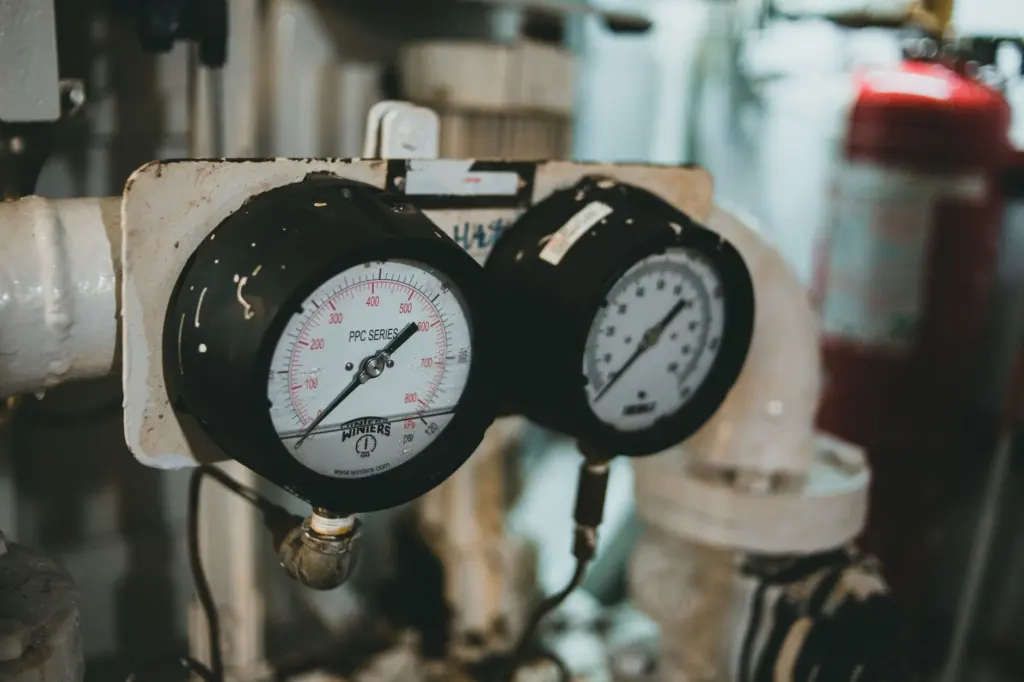
Record the reading at set intervals so you can see a trend, not just a number. A gradual rise is a maintenance signal. A sudden change points to a specific fault.
Why a collector loses performance
When performance falls, work through the likely causes in a sensible order, using the dust collector troubleshooting guide alongside the points below:
- Clogged media. Accumulated dust blocks the filter and lowers efficiency, so check cleaning performance and pressure trend first.
- Obstructed cleaning. A.C.T. highlights avoiding internal filter yokes that interfere with pulse cleaning, which shows cleaning can be impaired by the collector’s own construction.
- Worn media. Abrasive dust wears through cartridge media quickly, which is the reason A.C.T. directs abrasive dust to a baghouse.
- Starved capture. If dust escapes at the hood, review the ductwork and branch airflow before blaming the filters.
Rising pressure across the filter nearly always connects to filter condition, which leads to the question of when to replace it.
Filter replacement and maintenance
How often filter bags should be replaced depends on the dust and the duty, not on a fixed calendar interval. Abrasive dust wears media faster, and heavy loading works it harder, so two collectors in the same plant can need replacement at different times. The more reliable trigger is condition: a pressure drop that stays high after cleaning, or visible wear, tells you more than elapsed time.
Build the interval from your own records. Log the differential pressure, note when cleaning stops restoring it, and replace on that evidence. A written routine keeps this consistent, and the dust collector maintenance checklist provides one to adapt.
Design features that ease replacement
Media that is easy to change gets changed on time. Global Industrial lists quick-release filters and easy-to-empty collection bags among the features of the collectors it sells. When comparing models, treat access and emptying as selection criteria in their own right, because a unit that is awkward to service tends to be serviced late.
Explosion venting and combustible dust
Explosion venting is a protection feature for collectors that handle combustible dust, and whether you need it depends on your powder, not on the collector type. Some manufacturers offer it as an option; A.C.T. lists custom explosion vents in its range. Laguna’s spec lines also carry NFPA safety certifications.
Treat a certification on a data sheet as a prompt to ask what it covers, not as a substitute for understanding your own powder. Quatro Air lists regulatory requirements among the factors in system selection, and for combustible dust that means following the applicable NFPA standards and OSHA guidance on your site. Settle the explosion protection question before the collector is chosen, because it can affect the collector’s location, construction and how the collector connects to the process.
Collector options at a glance
The table below summarises how the main dry options compare on the criteria that decide most selections. Use it as a late check on the choice made through the decision order above, not as a substitute for it.
| Option | Best suited to | Main trade-off | Planning use |
|---|---|---|---|
| Baghouse | Abrasive dust or heavy loading, using fabric filter bags | May need more space and maintenance than cartridge systems | Default for rough duty, if floor area and upkeep allow |
| Cartridge collector | Fine, dry particulate that is mostly uniform in size | Abrasive dust wears the media quickly | Compact choice for fine, consistent powders |
| Cyclone | Larger particles, separated by centrifugal force, often as a pre-filter | Targets the coarse fraction, so it complements a filter stage | Add ahead of a filter when a coarse load is present |
The comparison draws on A.C.T.’s guidance on dust type and Quatro Air’s overview of collection methods.
Frequently asked questions
Can one collector serve several workstations?
Yes. Quatro Air describes centralized systems that connect multiple workstations to a single dust collector. The ductwork then carries the design burden, since each branch must still deliver capture at its own hood.
Can filters be changed without entering the collector?
On some designs, yes. A.C.T. says its cabinets are built so filters can be serviced from the outside with tool-free access. Ask any supplier whether this applies to the model you are considering.
Does a larger motor mean a better collector?
No. Motor power drives airflow, but the filter area, the duct system and the dust profile decide how well the collector actually performs. Compare motor size alongside the filter area figures, as Laguna lists them together for its I|Flux models.