| Situation | What the evidence supports | Planning use |
|---|---|---|
| Ratio too high | Pressure drop rises, the filter clogs quicker and cleaning energy increases. Early breakage and more frequent filter changes are possible. | Add media area before accepting a compact collector for a heavy dust load. |
| Undersized collector | Overloaded filter elements push the exhaust fan’s static pressure requirement too high. | Check fan duty and filter area together, not separately. |
| Ratio too low | The baghouse is oversized. There are fewer operating issues, but investment cost is not optimal. | Treat it as a capital cost trade-off, not a fault. |
| Cartridge collector | Cartridge ratios are 3 to 4 times lower than the equivalent for bag filters. | Never apply a bag ratio to a cartridge design. |
| Cleaning method | Pulse jet, shaking, reverse air and no cleaning system each have their own typical range. | Pick the range that matches the cleaning method fitted. |
| Units | US ft3/min/ft2 values differ from SI m3/s/m2 values. | Convert to one system before comparing quotes. |
These effects and ranges are drawn from the powderprocess.net air-to-cloth reference and a dust collector sizing article from CPE Filter.
The air to cloth ratio is the total airflow through a collector divided by the total filtering area of its media. A good value depends on filter type, dust load and cleaning method, and a ratio set too high raises pressure drop.
The ratio is one of the first numbers to check in any of the industrial dust collection systems you specify or inherit. It is sometimes called the filter ratio of a baghouse, and the sections below cover what goes wrong at either extreme, which ranges are typical, and how the calculation works.
Consequences of a ratio set too high or too low
A ratio that is too high overloads the media, and a ratio that is too low buys more collector than the duty needs. Both are design decisions with a cost, and the higher-ratio error is the one that shows up in daily operation.
Too high: pressure, clogging and filter life
When the ratio is too high, the pressure drop through the filter becomes too high and the filter clogs quicker, according to the powderprocess.net reference. The same source notes that cleaning energy increases, that filters risk early breakage and that they must be changed more often. The practical effects are:
- Rising differential pressure: the collector reaches its cleaning or alarm limits sooner, so the cleaning system works harder to hold the same airflow.
- Shorter filter life: more frequent replacement adds both media cost and maintenance downtime.
- Fan strain: an undersized system overloads the filter elements and demands too high a static pressure from the exhaust fan, as CPE Filter explains.
If a collector shows persistently high differential pressure, check whether the filter area matches the airflow it actually handles before blaming the cleaning system.
Too low: an oversized and costly collector
If the ratio is too low, the baghouse is oversized and there will be fewer operational issues. The investment cost, however, is not optimal. A low ratio suits a buyer who values quiet, steady operation over capital cost. It is a poor fit for a project where the budget is the binding constraint and the dust load is modest. Lower is not automatically better, because every extra unit of media area is paid for up front.
Typical ranges by cleaning method and collector type
The cleaning method is the largest single influence on the recommended range. The powderprocess.net reference table lists these ranges in m3/s per m2, citing Rhodes’ Principles of Powder Technology and Neundorfer:
- No cleaning system: 0.01 to 0.015 m3/s/m2.
- Shaking: 0.01 to 0.03 m3/s/m2.
- Reverse air: 0.005 to 0.02 m3/s/m2.
- Pulse jet: 0.01 to 0.075 m3/s/m2 in the broad table, while the Rhodes textbook entry gives up to 0.03 m3/s/m2.
Reverse air sits at the gentle end of the table. Pulse-jet cleaning tolerates the widest span, so the end of the span you choose should follow the duty and the dust rather than the headline maximum. A ceiling in a reference table is not a design target.
Cartridge versus bag collectors
Ratios for cartridge filters are 3 to 4 times lower than the equivalent for bag filters, per the same reference. A quote that applies a bag-style ratio to a cartridge collector should be questioned. In a cartridge collector the media is pleated and arranged in rows, so area per cartridge, cartridge count and layout all matter when you compare designs.
Adjusting for the duty
Application factors for pulse-jet bag filters differ by duty, with separate values for nuisance venting, product collection and process gas filtration. The duty therefore changes the acceptable ratio, even with the same filter and cleaning method. Higher dust loads typically require more media to bring the ratio down, as Air Cleaning Specialists note.
The reference is explicit that it is difficult to give definitive values for the best ratio, since it depends on filter type, dust, dust load and cleaning technology. Treat the ranges above as a screening tool and agree the final figure with the collector supplier for your dust.
How the ratio is calculated
The air-to-cloth ratio is the total airflow of a system divided by the total filtering area of the media, as Micro-Lube describes it. Because airflow per unit area is a velocity, the ratio is also called filtration velocity.
Formula and units
In SI terms, the ratio is inlet airflow in m3/s divided by effective filter surface in m2, which gives a velocity in m/s. Filtration velocity is often expressed in m/s or cm/s, while US practice uses ft/min, per powderprocess.net. In US usage the ratio is airflow in CFM per square foot of filter area. A 3,000 CFM collector with 1,000 sq ft of media has a 3:1 ratio, as in the Air Cleaning Specialists example.
Values in ft3/min/ft2 differ from values in m3/s/m2, so never mix them. Convert a published range or a supplier quote into one system before comparing it with your own figures.
Net versus gross cloth area
The ratio is calculated on effective filtration area, because filter pores are not all available. Typical available pores represent 70 to 90% of the total filtration surface, per powderprocess.net. In baghouse terms, the total surface is the gross cloth area and the effective surface is the net cloth area. Dividing the same airflow by gross area gives a flattering, lower ratio than dividing by net area. When comparing quotes, confirm which area each supplier has used.
Where the ratio fits in collector sizing
The ratio links filter area to airflow, so it should be settled together with the airflow target and the fan. Our guide on how to size a dust collector covers the airflow side. The ductwork then sets the pressure the fan must overcome, which is covered in dust collection duct design.
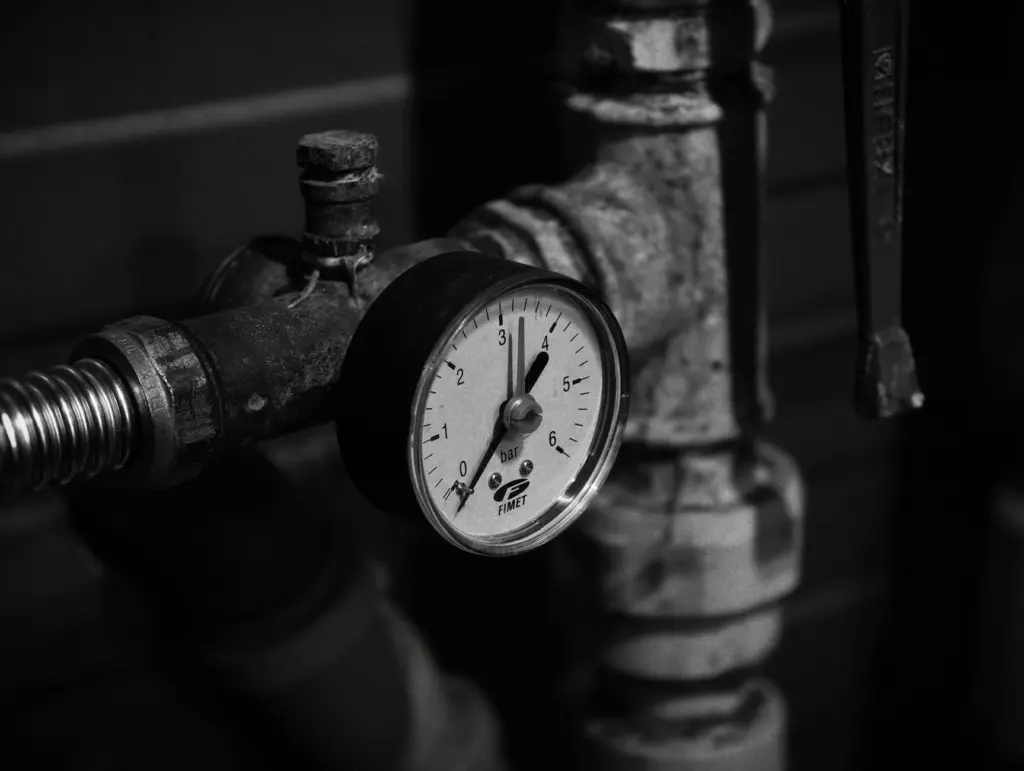
Filter loading shows up in the pressure the fan must deliver. An undersized filter area therefore affects fan selection as well as filter life, so review the two together.
Frequently asked questions
What is a good air to cloth ratio?
There is no single good value. The right figure depends on filter type, dust, dust load and cleaning technology, so use the ranges above only as a starting point and confirm with the supplier.
Is air-to-cloth ratio the same as filtration velocity?
Yes. Airflow per unit of filter area is a velocity, so the ratio is often quoted as filtration velocity in m/s or cm/s in SI, or in ft/min in US practice.
Can I compare US and SI ratio values directly?
No. Ratios in ft3/min/ft2 differ from ratios in m3/s/m2, so convert to one unit system first.
Does a heavier dust load change the ratio?
Yes. Higher dust loads typically need more media to bring the ratio down, which means a larger filter area for the same airflow.