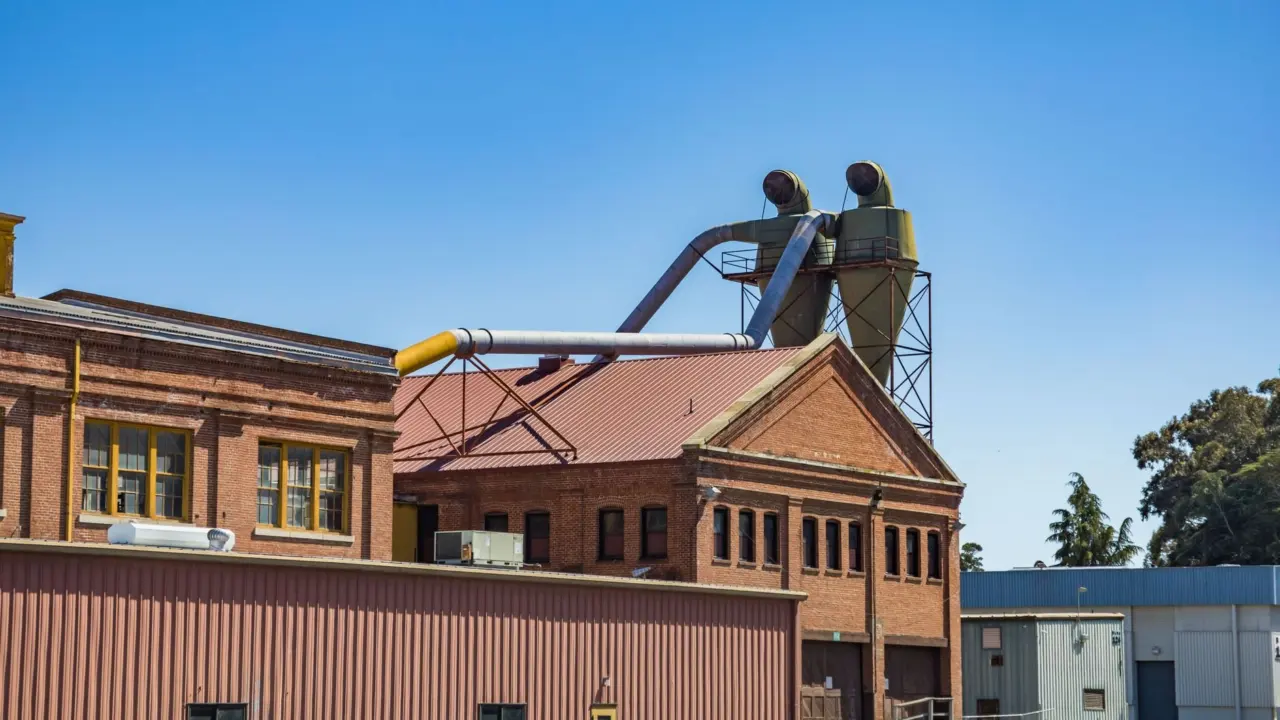
A cyclone dust separator spins dusty air so heavy particles drop out, which makes it a strong first stage for coarse dust but a weak final stage for fine dust.
Picture a plant whose baghouse filters keep loading up with coarse material. The usual fix is not a bigger filter but a cyclone ahead of it, as one part of wider industrial dust collection systems.
How a cyclone separates dust from air
A cyclone separator removes dust by forcing the air stream into a spiral. According to Draire’s comparison of ESPs and cyclones, the spiral motion throws heavier particles against the walls, and they are collected in a hopper. CPEF’s technical explainer adds that centrifugal, gravitational and inertial forces together separate the large and coarse particles.
The practical consequence is that separation depends on particle mass. Heavy particles reach the wall and fall out. Light, fine particles follow the air towards the clean-gas outlet. That single mechanism explains almost everything else about where a cyclone works well and where it does not.
Common misunderstandings about cyclones
Most disappointment with cyclones comes from expecting the wrong job from them. The table sets the usual assumptions against what the evidence supports.
| Common assumption | What holds | Planning use |
|---|---|---|
| A cyclone is a fine-dust filter | Efficiency on fine particulate is often 50% to 80%, while ESP vendors state removal rates of over 99% on fine particles | Do not rely on a cyclone as the last stage where fine emissions matter |
| Cyclones suit only light, clean duty | They handle abrasive materials, high-temperature applications and high dust loads at lower energy | Consider them where the stream is hot, gritty or heavily loaded |
| A cyclone makes a filter unnecessary | Lower upfront cost often comes with a need for additional filtration | Plan the cyclone and the filter collector as one system |
| A pre-stage barely changes the filter’s life | It reduces dust loads in larger baghouses and cartridge collectors, and cleaning and replacement frequency is greatly reduced | Treat it as a protective stage for the filter |
Figures and claims in the table come from Draire’s cyclone and ESP comparison and CPEF’s explanation of centrifugal collectors; both are manufacturer sources, so treat the percentages as vendor-stated ranges.
The pattern behind the table is simple: a cyclone is a coarse-dust workhorse, not a precision cleaner.
Geometry and design parameters
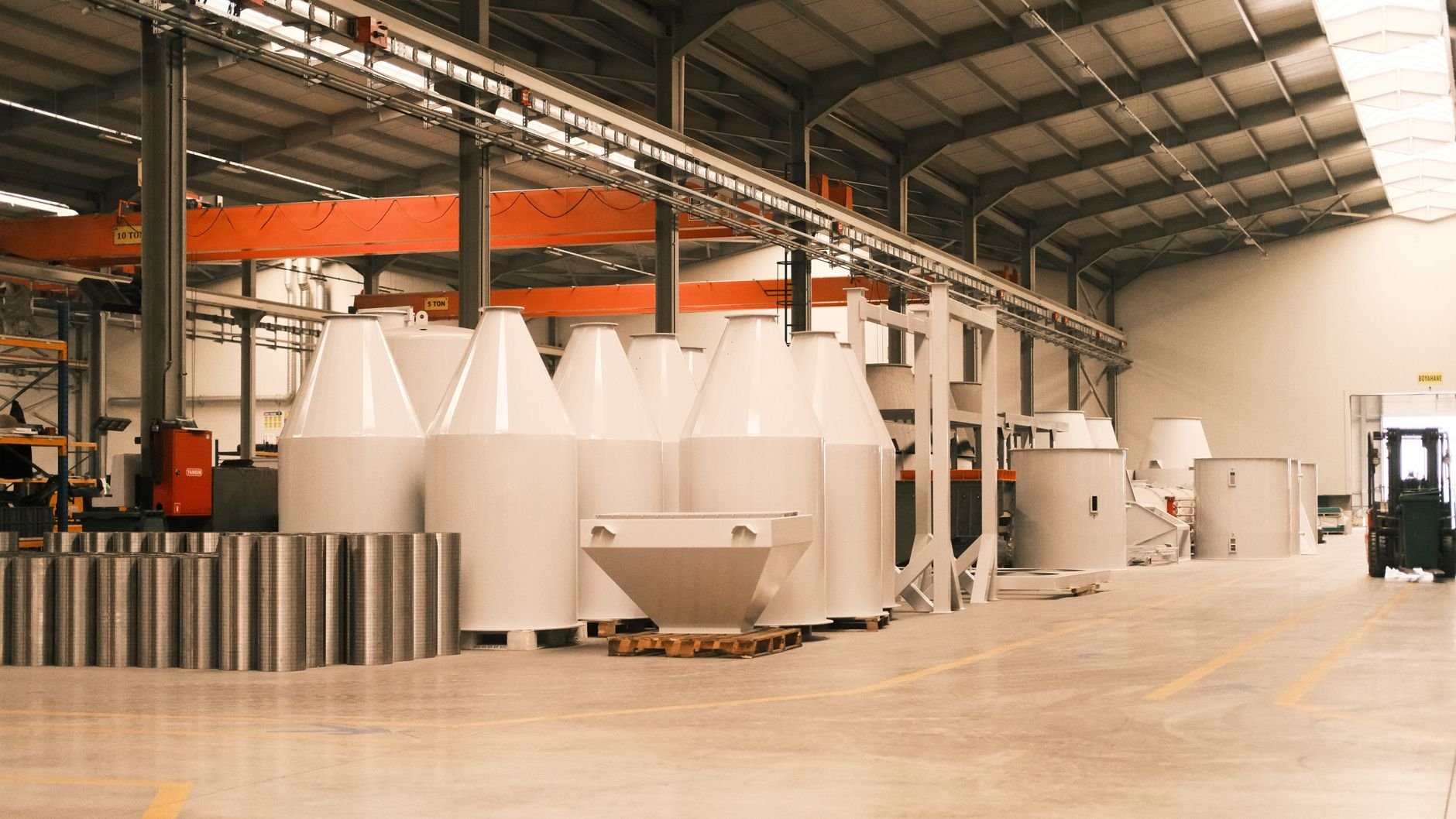
Cyclone geometry decides how well the spiral does its job, so the design is worth understanding before a unit is specified. CPEF describes a cyclone as consisting of six sections, including the inlet scroll section, the conical housing chamber, an inner vortex tube and the hopper.
Inlet and body
The inlet scroll introduces the dusty air so that it enters the body already rotating. The cylindrical and conical sections then keep that rotation going while particles migrate to the wall and slide towards the hopper. Because the mechanism relies on rotation and particle mass, the particle size a given cyclone captures reliably is a property of its design and operating conditions. Ask a supplier for a fractional efficiency curve for the actual dust rather than relying on a single headline percentage.
Vortex finder
The vortex finder is the inner tube through which cleaned air leaves. A supplier listing for a vortex finder describes the component as designed to improve particle separation and reduce wear. In practice that makes it a part to inspect and specify carefully, because it sits where the fastest-moving cleaned air exits.
Efficiency on fine dust
Cyclone efficiency is highest on larger particles and falls as dust gets finer. Draire reports that cyclones excel where larger particles are the concern and that they deal with high dust loads at lower energy. For fine particulate matter, the same source puts efficiency often between 50% and 80%.
That range is the key decision figure. Use it as follows:
- Coarse, heavy dust: a cyclone suits this duty well and can often serve as the main collector where emission limits are not demanding.
- Mixed dust with a fine fraction: expect the fines to pass through the cyclone, and plan a downstream filter to catch them.
- Mostly fine dust under tight limits: a cyclone alone is the wrong tool. Vendors of ESPs state removal rates of over 99% for fine particles, which shows how wide the gap can be, and a filter-based collector such as a cartridge dust collector is the more usual match.
Where the stream is wet, sticky or carries gases as well as dust, wet scrubber dust collection is another route to compare. Cost also shapes the choice: cyclones usually come with lower upfront costs than an ESP, but may require additional filtration.
Using a cyclone ahead of a baghouse
A cyclone belongs ahead of a baghouse when the incoming air carries a heavy load of coarse dust. CPEF notes that cyclones function as a pre-cleaner in multiple-stage dust collection systems, which reduces the dust loads in larger baghouses and cartridge collectors. As a result, the frequency of cleaning and replacing the larger filters is greatly reduced.
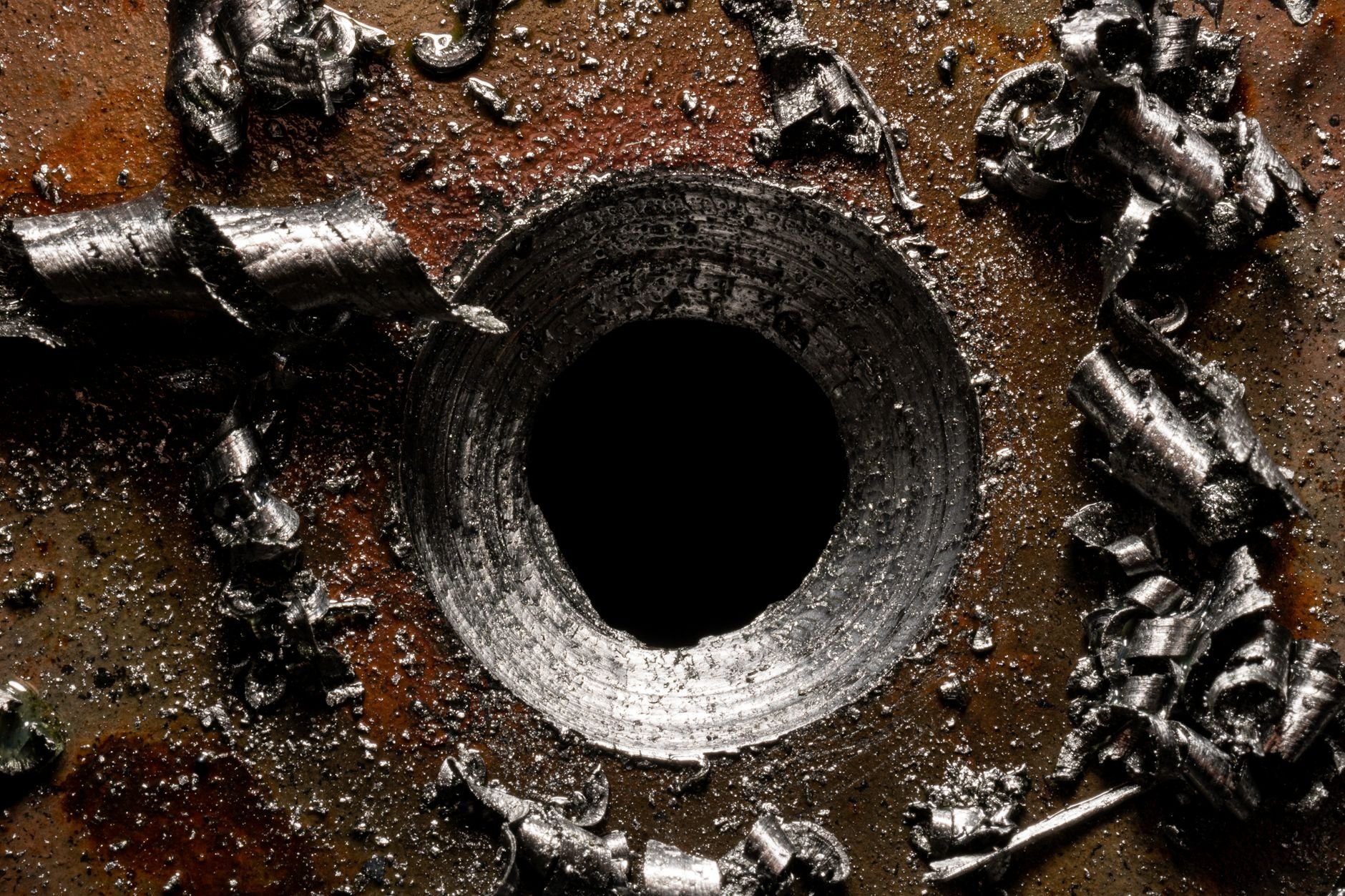
This is where the pre-separator earns its place. It takes the bulk of the heavy material out cheaply, so the filter only has to handle what remains.
- Good fit: abrasive, coarse or heavily loaded streams, where unprotected filter media would clog or wear quickly. Cyclones can handle abrasive materials and suit high-temperature applications.
- Weaker fit: streams that are almost entirely fine dust. Because fines tend to pass through, the cyclone removes less of the load and the filter’s burden changes little.
- System view: the cyclone is a protective stage, not a substitute. The baghouse still does the final cleaning.
Discharge and wear
Everything the cyclone captures leaves through the hopper, so the discharge arrangement is part of the cyclone system rather than an afterthought. Collected dust needs a controlled route out, and the equipment fitted there should be treated as part of the cyclone’s design brief.
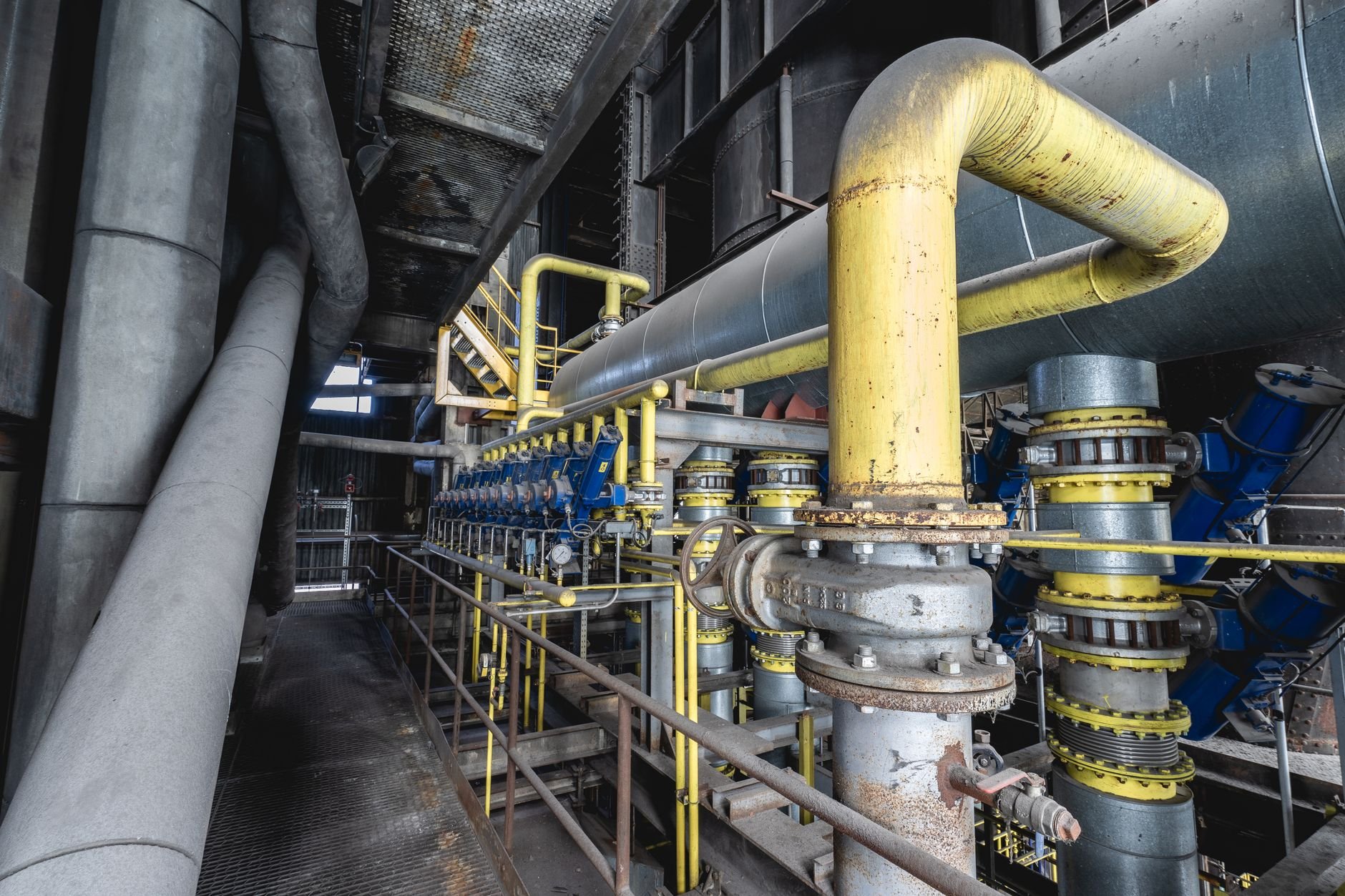
Abrasive dust is a wear concern because it rubs against the walls as it spirals. The cyclone’s ability to handle abrasive materials is a strength, but the wear-prone zones, including the vortex finder, deserve a place on the inspection list.
Frequently asked questions
| Question | Answer |
|---|---|
| How efficient is a cyclone for fine dust? | Vendor sources put it often between 50% and 80% for fine particulate matter. It is considerably better on larger, heavier particles. |
| Should a cyclone always go ahead of a baghouse? | No. It pays off when coarse dust or a high dust load would otherwise burden the filter. It adds little if the dust is almost all fine. |
| Can a cyclone handle hot or abrasive dust? | Yes. Draire states that cyclones can easily handle abrasive materials and suit high-temperature applications. |
| Is a cyclone cheaper than an electrostatic precipitator? | Cyclones usually have lower upfront costs than an ESP, but may need additional filtration to reach a fine-dust target. |