A bin vent filter is a filter mounted on a silo or bin roof that cleans air leaving the vessel while powder is blown in. Choose cartridge or bag elements by dust load and space, and match the housing’s pressure rating to the relief setting.
When a tanker or conveying line blows powder into a silo, the conveying air has to leave through the roof, and it carries fine dust with it unless a filter stops it. That job belongs to a dedicated roof-mounted unit, not to the wider industrial dust collection systems that serve process hoods and transfer points. The sections below follow the decisions in the order they usually arise.
What a bin vent filter does on a silo
Micronics describes bin vents as filters for dry bulk materials that are conveyed pneumatically to destination points such as bins, hoppers and silos. The silo is the vessel being filled, and the bin vent is the filtered outlet through which displaced air escapes. A silo top dust collector of this kind is a different machine from a central collector, because it sits on the vessel it protects and handles that vessel’s air only.

US Air Filtration notes that bin vents are most commonly used on silos and storage bins, or where product moves between locations. Typical examples are cement, concrete and asphalt plants, but the principle applies to any dry powder stored in a closed vessel and filled by air.

What the filter handles during a fill
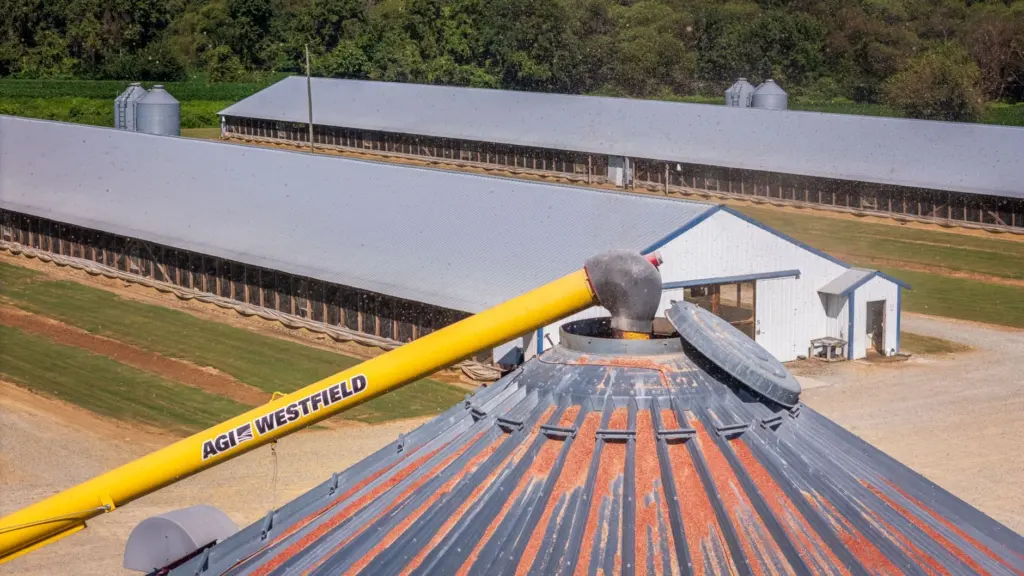
Filling is the demanding moment. Air arrives with the powder, and the vent must pass that air out of the silo while the elements keep the dust inside. Give the supplier the conveying air volume of the delivery system, not just the silo volume. Sizing to the displaced air is the main way a silo vent differs from hood-driven collection.
Choosing cartridge or bag elements
Both formats are offered by the same housings. Micronics states that its bin vents may be equipped with pleated filters or conventional filter bags and cages. The decision usually comes down to dust character, available height and how servicing will be done.
| Element type | What is offered | Planning use |
|---|---|---|
| Pleated cartridge | Pleated filters in standard bin vents; ECO filter cartridges in modular silo units, with anti-static polyester fleece and a PTFE membrane | Suits compact housings and applications that need anti-static media. Hinged side doors allow cartridge removal in the modular design. |
| Bag and cage | Conventional filter bags and cages, or a bag filter option in the modular unit | Suits users who already stock bags and cages or prefer that format. Confirm height for bag and cage removal before ordering. |
Element options are drawn from Micronics bin vent documentation and the modular bin vent specification.
Which suits which duty
- Choose cartridges for heavy dust. US Air Filtration lists pleated filters in spunbond polyester as the most common media for dust-heavy applications such as cement, concrete and asphalt plants.
- Choose bags when the plant is set up for them. Conventional bags and cages remain a standard option, so existing spares and maintenance habits can decide the matter.
- Check the media against the powder. The modular unit’s polyester fleece with a PTFE membrane is described as anti-static. Confirm that choice against how the powder behaves before treating any media as a default.
Pressure relief and explosion protection on a silo vent
A silo vent filter does not replace pressure relief. It sits in the path of the air leaving the silo, so the housing’s rating and the relief device settings must be chosen together. Micronics rates standard square or rectangular bin vents for ±20 in W.G. and bolts them directly to the bin or silo. Cylindrical housings are available with a design pressure of ±17 in Hg (8.35 PSIG).
Treat those figures as housing ratings, not targets. Relief and vacuum relief devices on the roof should operate well inside the rating of both the housing and the silo, and the silo designer’s limits take priority over any filter rating.
When explosion protection enters the decision
Whether a silo vent needs explosion protection depends on whether the stored dust is combustible and on the classification of the area around the silo. Where a hazardous area applies, the filter itself must be suitable. The modular bin vent from Making is designed to ATEX 2014/34/EU for use in Zone 22 areas. Ask for the certification that matches the actual zone and dust, and have a dust hazard review settle the question before the filter is specified. An explosion vent panel on the housing is one form of protection hardware, and its suitability depends on that review.
Pneumatic filling and cleaning
During a pneumatic fill the filter collects dust on its elements, and pulse cleaning removes it. Micronics explains that the material collected on the filters is pulse-cleaned and dropped back into the bin, so captured product is returned to storage and not discarded. That is a real advantage for valuable powders.
Compressed air for the pulse
The modular unit from Making uses de-dusting with purified, de-oiled air compressed up to 6 bar. The practical point is the air supply. It must be clean and dry enough to protect the elements, and it must be available during delivery, since a delivery without cleaning air lets dust build up on the media. Confirm the compressed air supply before the first fill.
Mounting, servicing and troubleshooting
Physical fit often decides the model before filtration does. The modular design from Making has a housing height of 1,000 mm and a filter hose diameter of 120 mm, and is described as fitting existing systems without extra vertical space. Hinged side doors give access for cartridge removal, which matters on a roof where working room is limited.
- Dust escaping at the roof. Check element seals and whether cleaning is actually running before suspecting the media.
- Dust building up on the elements. Check the compressed air supply and its quality, since the pulse depends on both.
- Difficult servicing. Confirm access doors and clearance for element removal at the roof before choosing between cartridge and bag.
Bin vents compared with a central collector
US Air Filtration describes installing several smaller bin vents instead of a single large central baghouse with ducting. A bin vent may not require additional ductwork, because it sits on the vessel it serves. That suits storage that is spread out across a plant.
A central collector still has a role where dust is drawn from machines through hoods. The design of those capture points is covered in dust collection hood design, and the layout question is covered in where to place dust collector in powder process line. Silo vents stay local to the silo in either arrangement.
Frequently asked questions
| Question | Answer |
|---|---|
| What is a bin vent filter and what does it do? | It is a roof-mounted dust filter for a silo, bin or hopper that filters the air leaving the vessel while dry bulk material is conveyed in pneumatically. |
| Should I choose a cartridge or a bag bin vent? | Pleated cartridges are the common choice for dust-heavy duties and compact housings. Bags and cages suit plants already working with that format. Both are offered in standard bin vents. |
| Does a silo vent filter need pressure relief or explosion protection? | Pressure relief should be matched to the housing and silo ratings. Explosion protection depends on whether the dust is combustible and on the area classification, so a hazard review should decide it. |
| How is the filter cleaned during filling? | Compressed-air pulses clean the elements, and the collected material drops back into the bin. The air should be purified and de-oiled. |
| Can several bin vents replace a central baghouse? | For separate silos, yes. Several smaller bin vents can be used in place of a single central baghouse with ducting, and each may need no extra ductwork. |