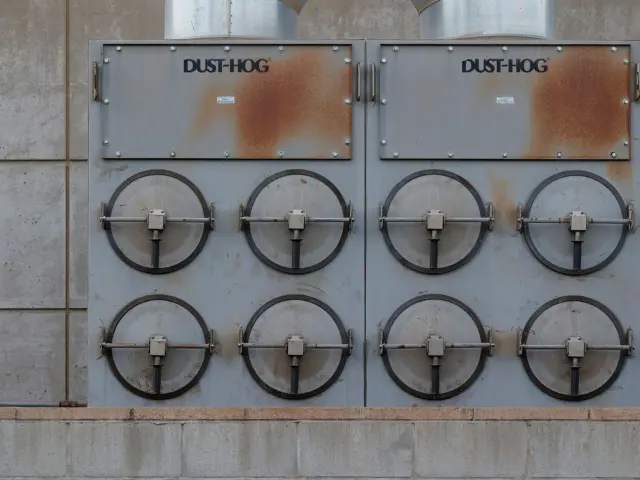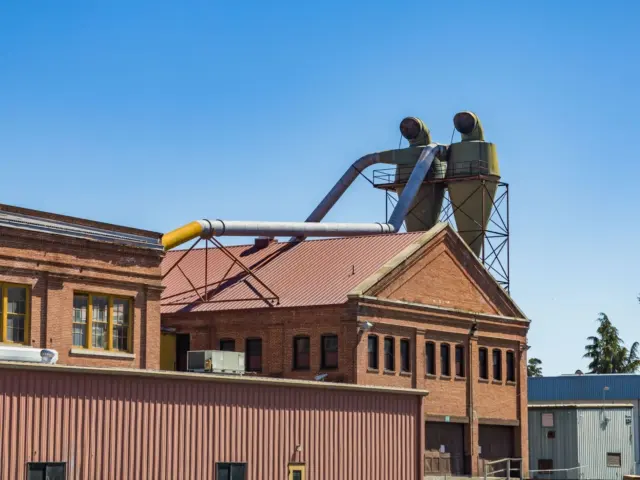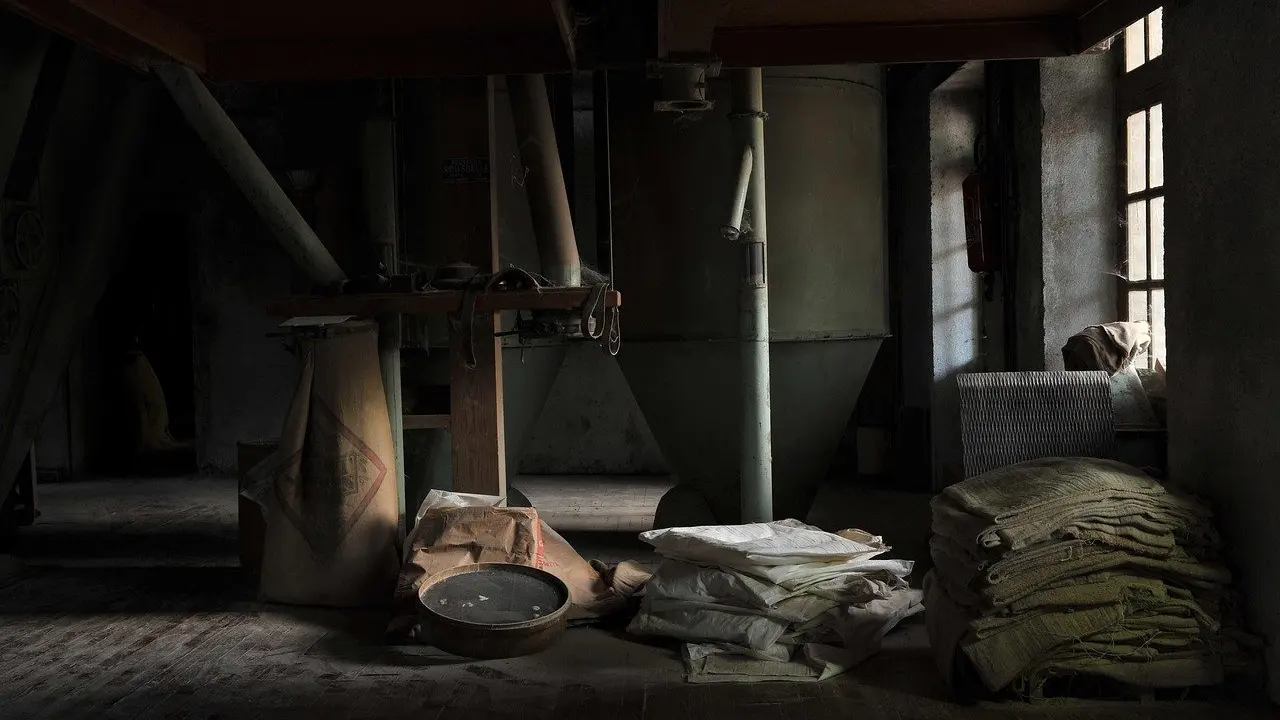
How does an industrial dust collector work? A fan pulls dust-laden air through a capture hood and ductwork into a filter, the filter media traps the particles, pulses of compressed air clean the media, and the dust falls into a hopper for discharge.
A newcomer walking a plant sees a hood, some duct, a large steel box and a drum, and often assumes the box simply sucks dust in. In practice each part does a separate job. This guide follows one dust particle through the chain and corrects the usual misunderstandings along the way. It sits within the wider topic of industrial dust collection systems.
One particle’s route, and where assumptions go wrong
A dust particle is released at a process point such as a grinder or saw. It is drawn into a hood, carried through ducts by moving air, separated from that air in the collector, and finally dropped into a hopper. Nothing in that sequence is passive. Air has to be moving at every stage, or the particle settles out in the wrong place.
The definition that EnviroPol Engineers gives on LinkedIn frames it well: a dust collector is a system for collecting, filtering and removing dust particles from exhaust or air streams. The table below sets the most common assumptions against what the equipment actually does.
| Common assumption | What actually happens | Planning use |
|---|---|---|
| The collector sucks dust in at the box. | Hoods or enclosures near the dust source capture particles, and fans or blowers create negative pressure that pulls them through the ducts. | Judge capture performance at the hood and duct, not at the collector body. |
| The filter does all the separating. | Separation can rely on centrifugal force, gravity settling, filtration media or electrostatic attraction. | Match the separation method to the dust before choosing media. |
| Cleaning is a manual job done when the filter looks dirty. | Cleaning cycles are timed or triggered by pressure sensors, and in pulse-jet designs compressed air pulses dislodge the dust. | Treat cleaning settings as part of the design, not an afterthought. |
| The dust ends at the filter. | Separated dust is collected in hoppers, dust bins or collection drums. | Plan the discharge point and how it will be emptied. |
The first, second and fourth rows come from the EnviroPol overview and the Villo Tech guide to dust collection systems; the cleaning row draws on the Villo Tech guide.
Misunderstanding one: the collector does the sucking
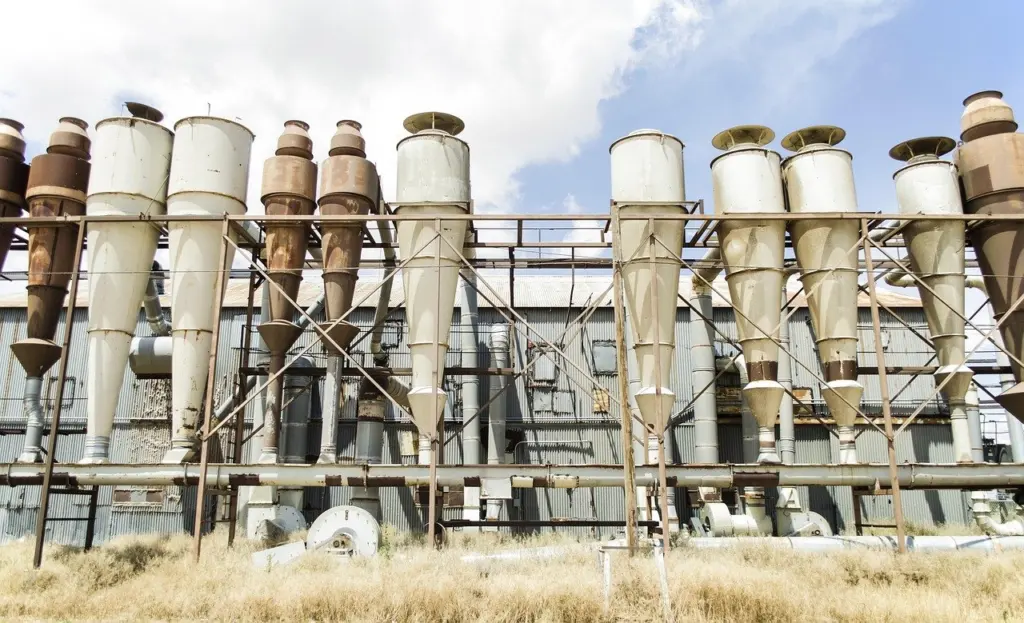
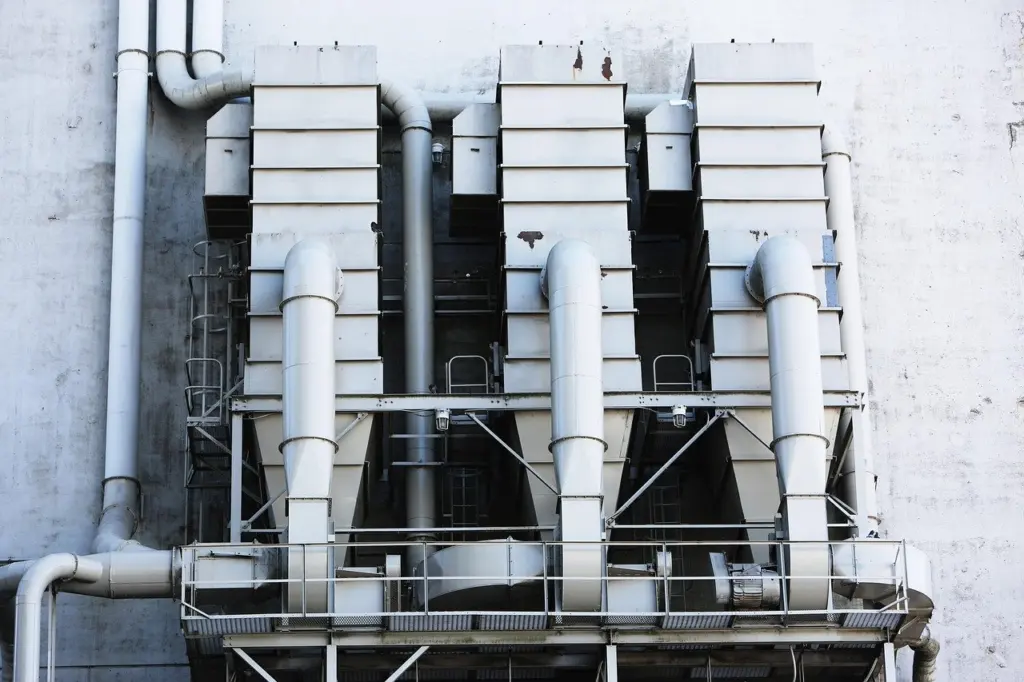
Capture starts at the process point, not inside the collector. The capture hood or enclosure sits next to the grinder, saw or transfer point, and Villo Tech notes that these hoods suction particles into the system. A hood placed too far from the source will pull in room air instead of dust, which is why hood position matters as much as fan size.
Ductwork keeps the particle moving
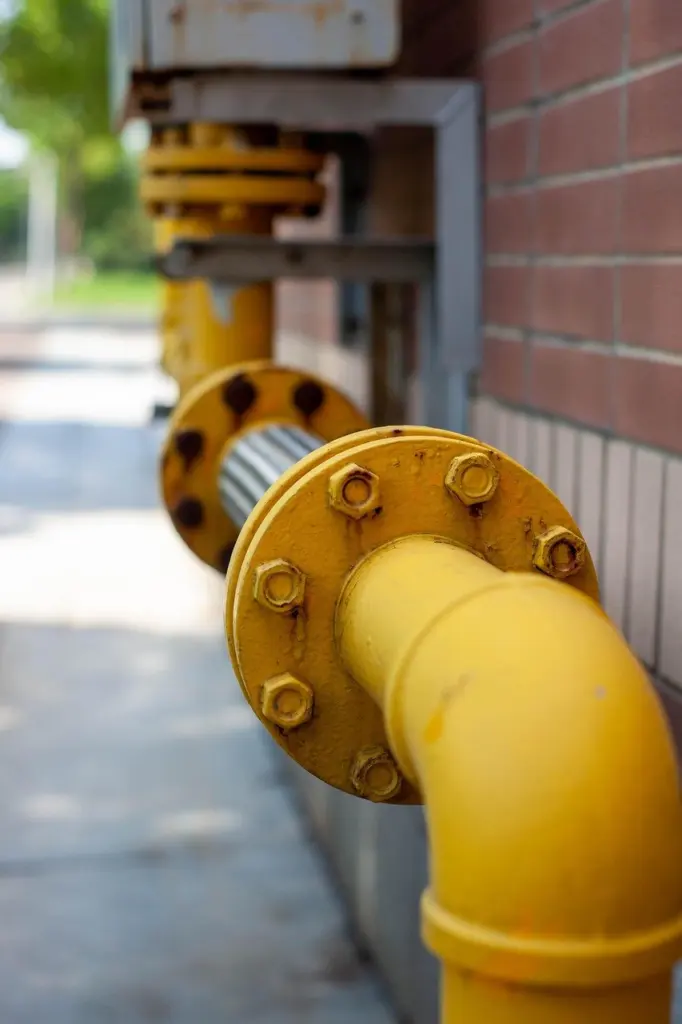
Once inside the ductwork, the particle must stay airborne until it reaches the collector. According to Villo Tech, duct air velocity runs about 3,000–4,500 FPM for heavy dust, and duct resistance is in the range of 6–12 inches of water gauge. Heavier dust needs the faster end of the velocity range to stay entrained, so a duct sized for fine, light dust is a poor guide for dense material.
The fan creates the airflow
The fan or blower is what creates negative pressure and pulls dust through the ducts. Variable frequency drives can adjust fan speed to match real-time demand, which saves energy compared with running flat out. When a plant outgrows its airflow, the fan, ducts and collector must be reviewed together; the guide on how to increase dust collector capacity covers that decision.

Misunderstanding two: the filter does all the separating
Filtration is one of several separation mechanisms, and the right one depends on the dust. The EnviroPol overview lists centrifugal force, gravity settling, filtration media and electrostatic attraction. Heavy particles can drop out before they ever reach a filter, which is why some designs pair a coarse separation stage with fabric filtration. The range of designs is compared in types of industrial dust collectors.
How a baghouse separates dust from air
A baghouse passes the dust-laden air through fabric bags, and the particles stay on the fabric while cleaned air passes through. IQS Directory describes baghouse bags made of cellulose, fiberglass or synthetics to trap fine particulates. As dust accumulates on the bag surface it forms a layer, often called a dust cake, which itself helps to catch further particles until the bag is cleaned.
Filter media and efficiency
Efficiency depends on the collector type and the particle size. Villo Tech quotes the following figures for common media and designs:
These are manufacturer-style ratings tied to particle size, so compare them only at matching sizes. A cartridge collector can reach a higher rating at smaller particle sizes than a baghouse, but the figures do not by themselves say which suits a given powder.
Misunderstanding three: cleaning means shutting down
Filters are cleaned by an automatic cycle, not by hand when they look dirty. Villo Tech states that cleaning cycles are timed or triggered by pressure sensors. In pulse-jet cleaning, compressed air pulses dislodge the dust from the filter surface, and this method is common in cartridge collectors.
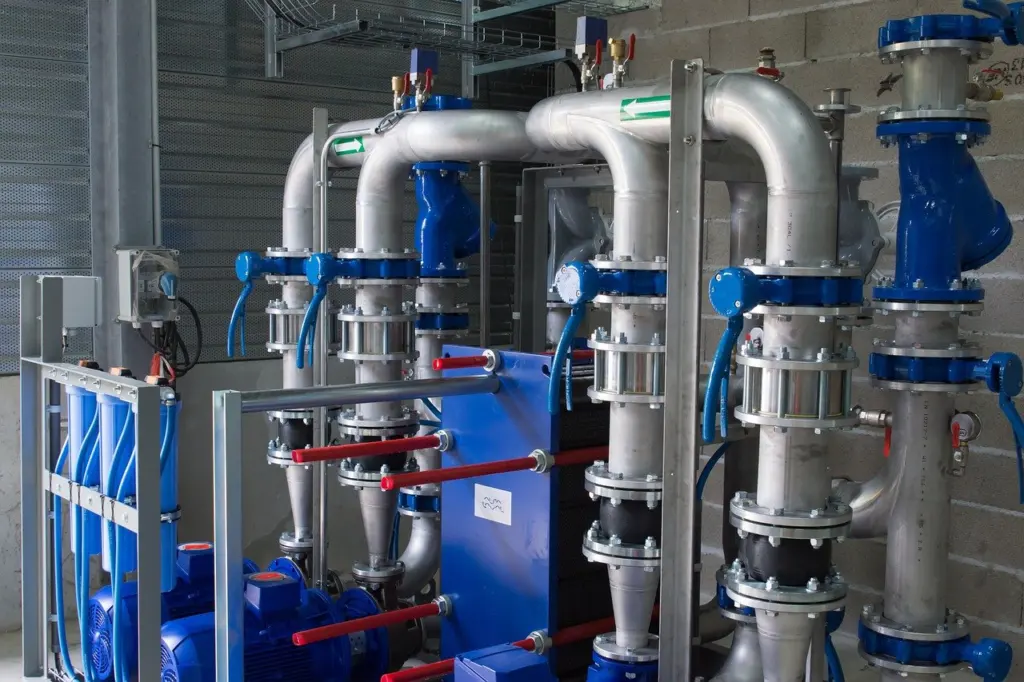
The header pipe carries compressed air, and valves on it release the short pulses that knock dust off the media. The dislodged dust falls toward the hopper below. A timer suits steady, predictable dust loads, while a pressure trigger responds to how loaded the filter actually is.
Misunderstanding four: pressure gauges are only for show
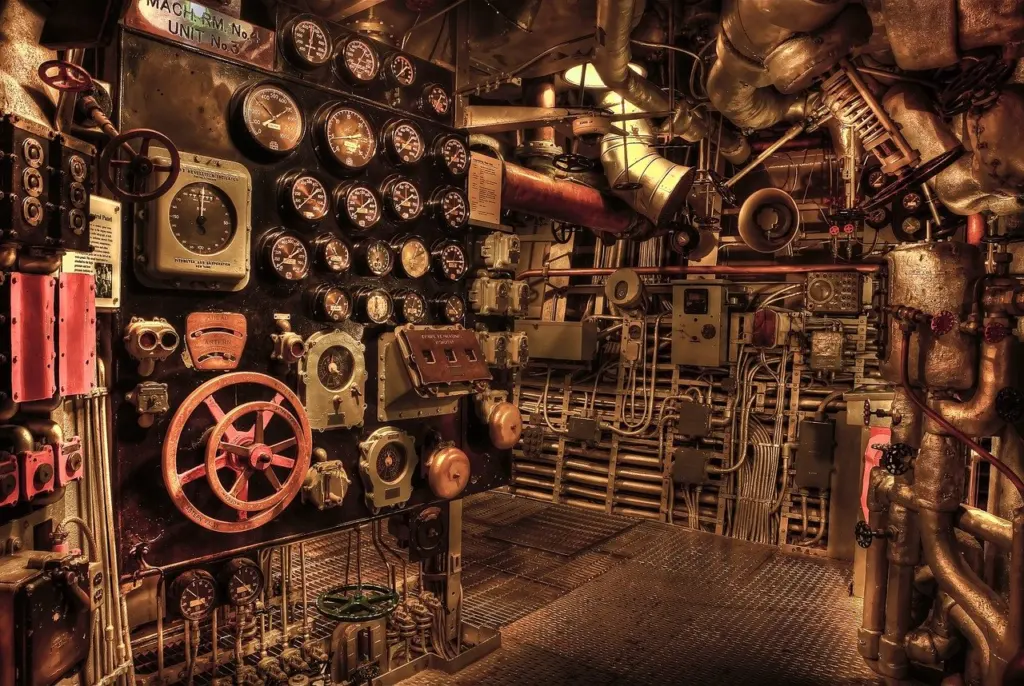
Differential pressure is the difference in pressure across the filter, and it is the operator’s main window into the collector’s condition. Because pressure sensors can trigger cleaning cycles, the reading is also the signal that the media needs attention. Villo Tech lists a daily check of the pressure gauges for abnormal drops as routine practice.
A sudden, abnormal change deserves a look rather than a wait. A steady reading within the normal band for that collector shows the cleaning cycle and the filter are doing their job together. Record the normal band at commissioning so that later readings have something to be compared against.
Misunderstanding five: the dust stops at the filter
The last stage is discharge, and it needs as much planning as the first. The EnviroPol overview says separated dust is collected in hoppers, dust bins or collection drums. Gravity and cleaning pulses move the dust down the hopper walls to the outlet.
A rotary valve or double dump valve is a common discharge option, according to the US Air Filtration baghouse FAQ. The valve lets dust leave the hopper in a controlled way, rather than leaving the outlet open. Choose the discharge device with the dust handling in mind: how often the drum or bin will be emptied and where the material goes next.
Frequently asked questions
| Question | Answer |
|---|---|
| When does a baghouse make sense? | The US Air Filtration FAQ associates baghouses with high volume: collecting more than one 55-gallon drum per day with airflow above 1,000 CFM. |
| How long have pulse-jet systems existed? | IQS Directory reports that pulse-jet filtration systems were introduced in the 1950s. |
| What filter media suits heat or chemicals? | Villo Tech says filter media range from polyester to PTFE, with PTFE used for extreme heat or chemical resistance. |